What the Fix Involves
The fault we see most in Angier isn't the fault we see in the older parts of this service area
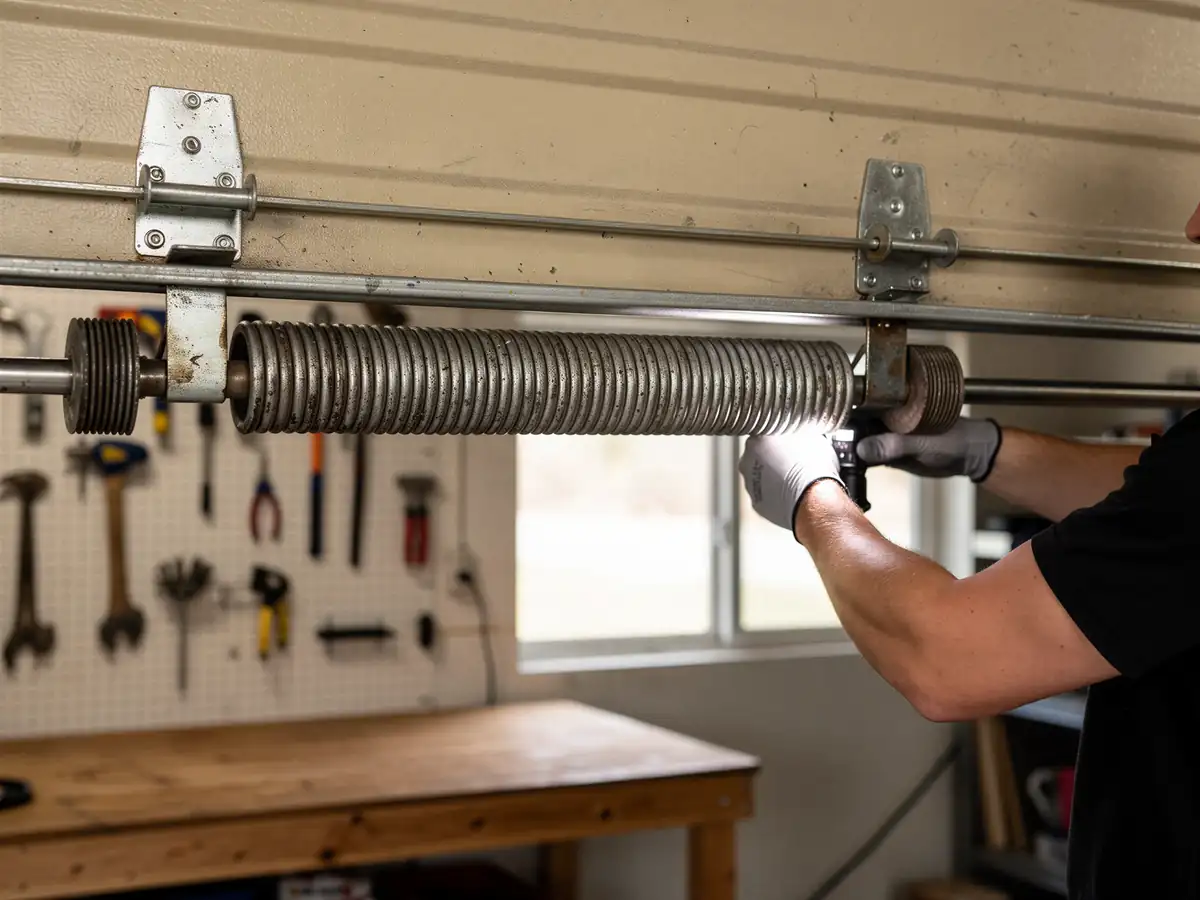
A broken torsion spring here usually isn't an ancient extension-spring setup with rusted side brackets - it's a factory torsion spring on a door that's somewhere between 10 and 28 years into its cycle life, snapped clean at a coil or sheared at the winding cone.
- 28 years
Angier's housing stock centers on 1997, noticeably newer than the 1959-2002 spread across the wider Fuquay-Varina service area
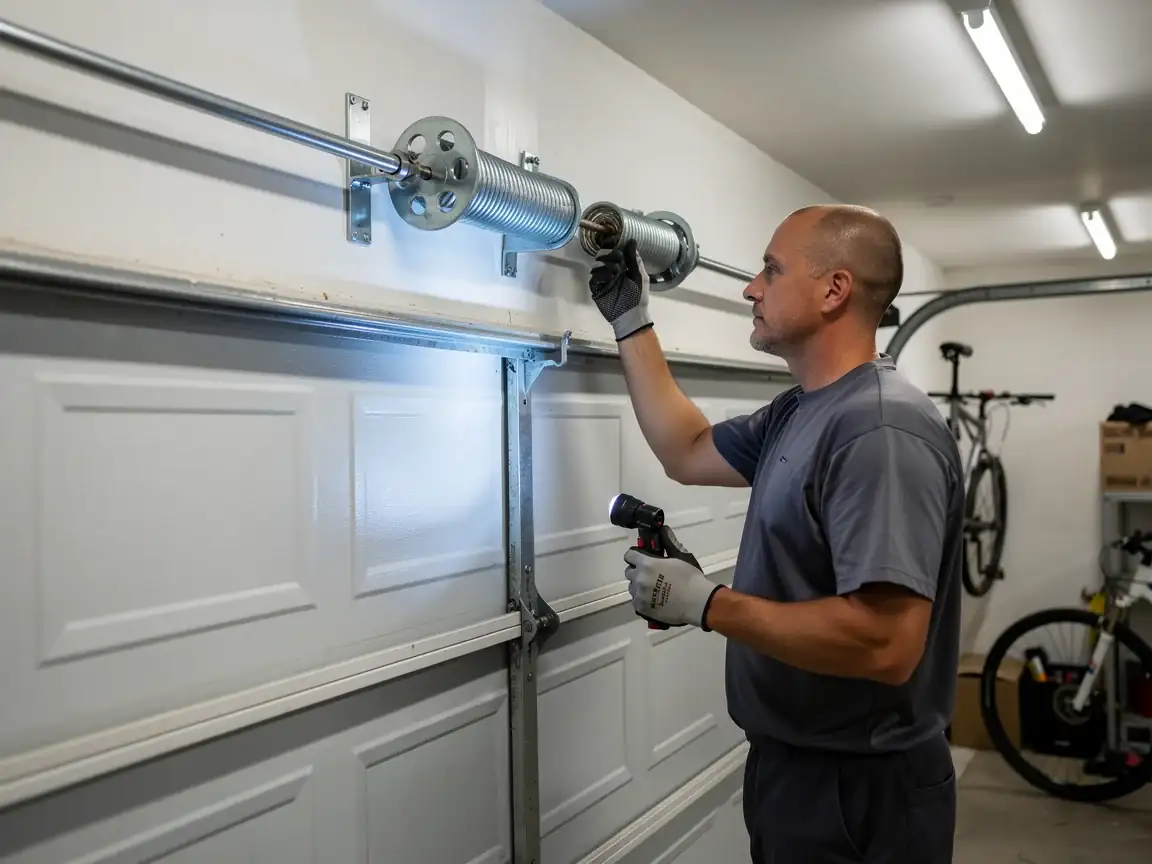
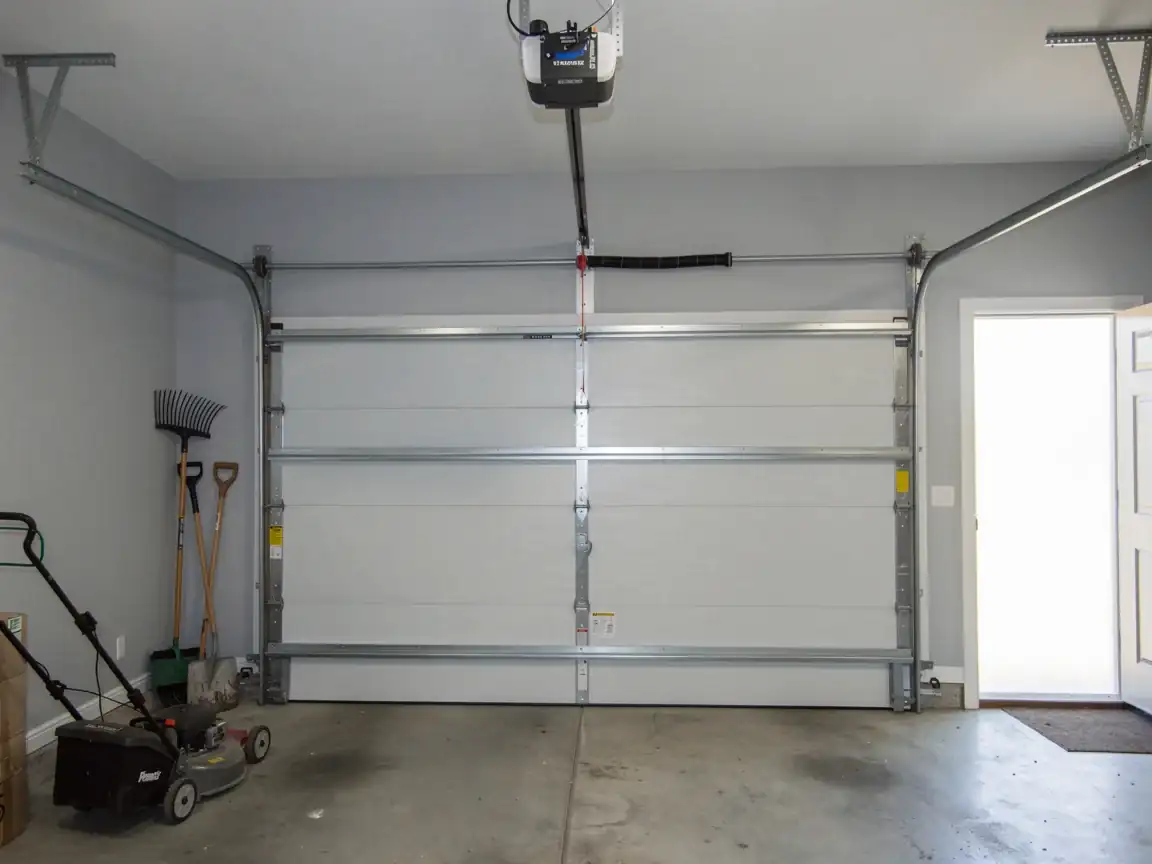
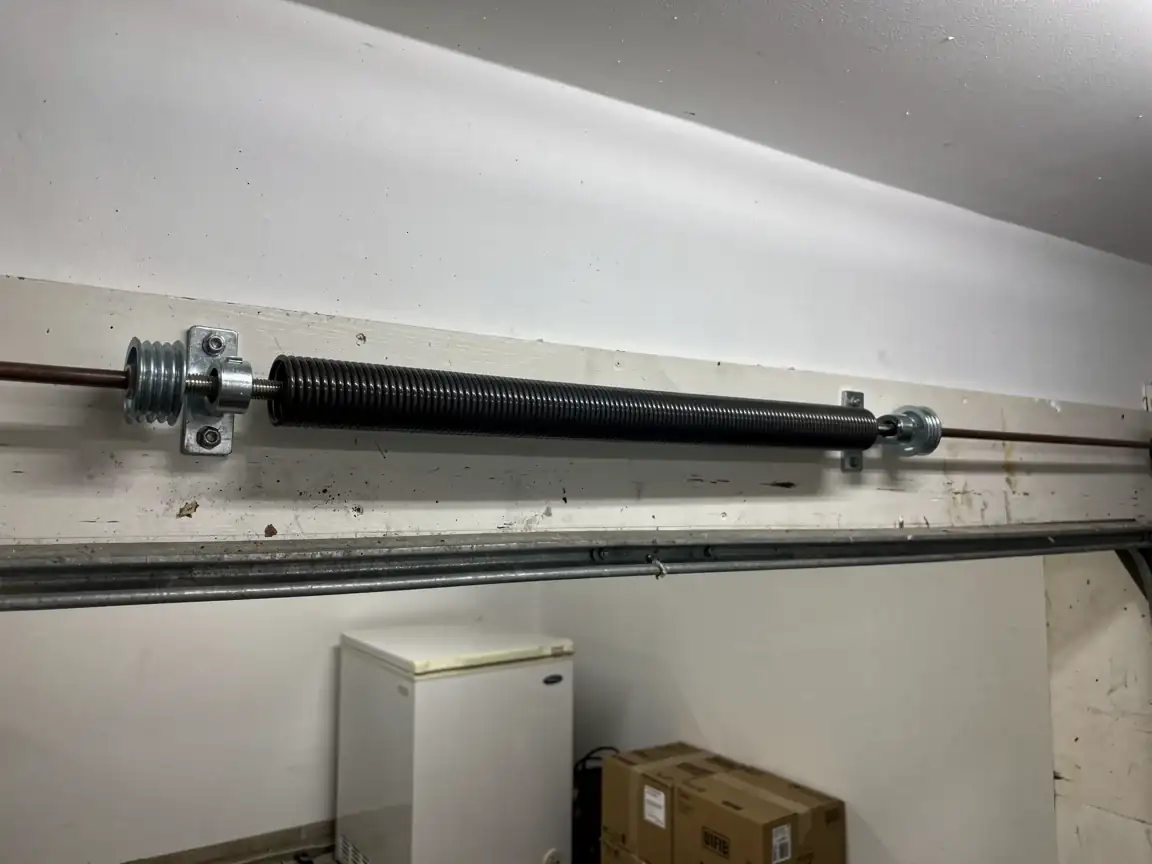
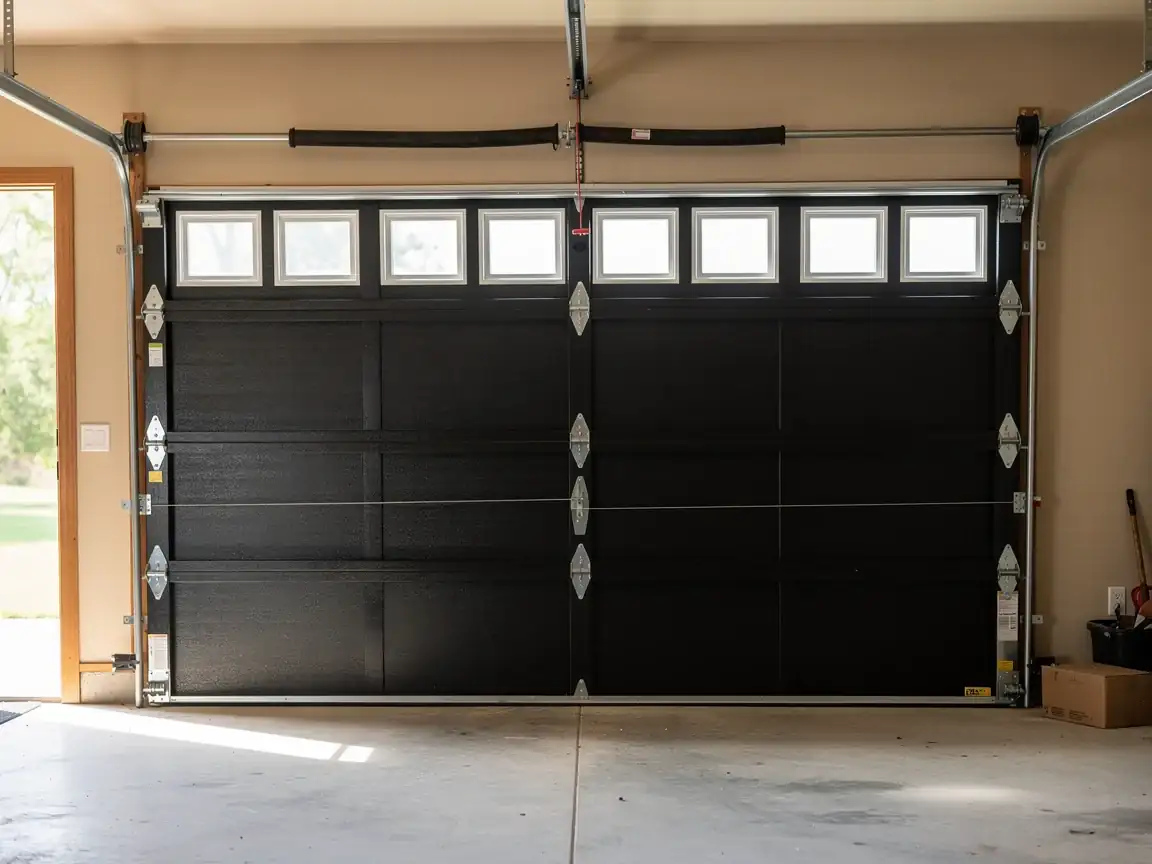
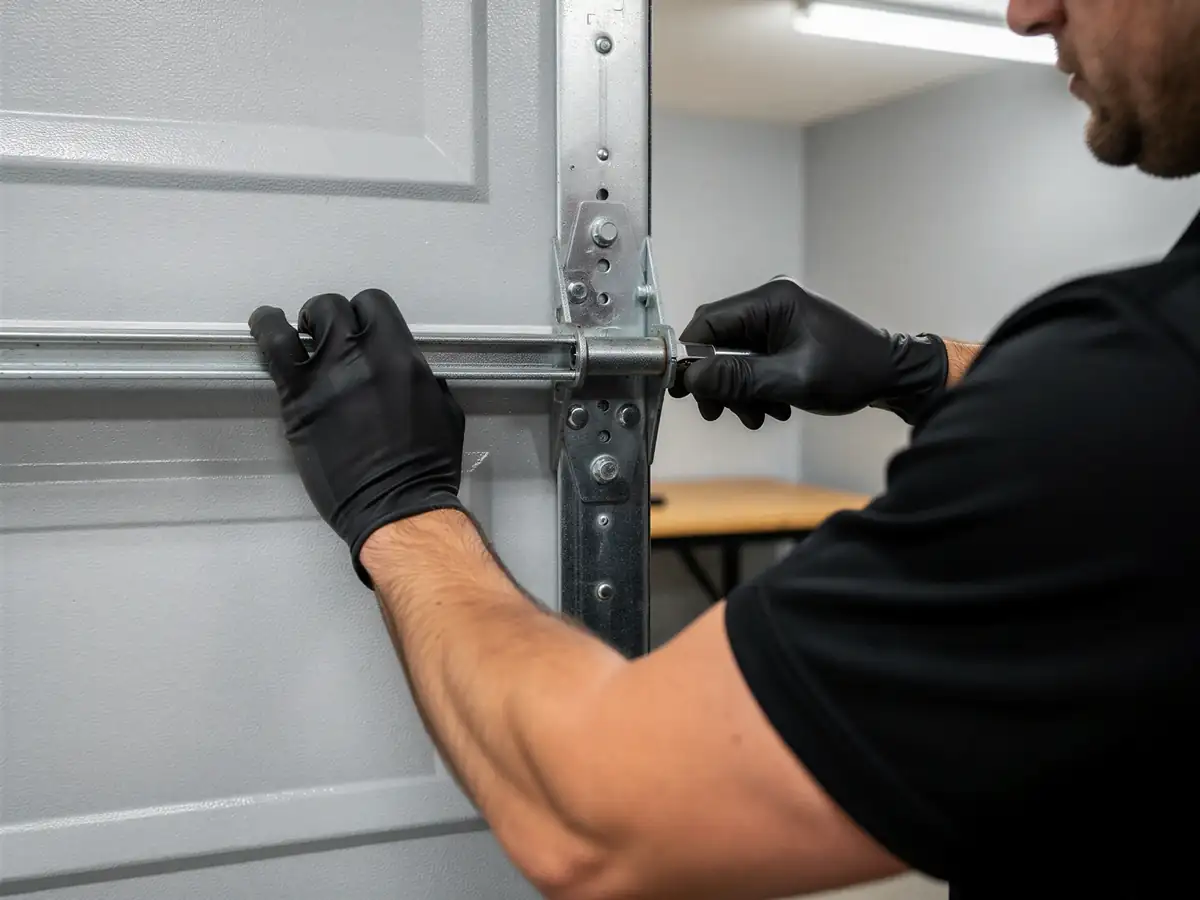
That matters for the fix: newer builds standardized on torsion springs mounted on a single shaft above the door, wound to a specific turn count for the door's weight. The job is measuring the old spring's wire gauge and length, matching it (or upsizing slightly if the door's been reinforced or re-skinned since original install), and winding it to spec with the door tracked and balanced - not just bolted back up and called done. We check the opener's force settings after, since a mismatched spring makes openers do work they were never built to do.
We don't patch a cracked spring or re-use one that's stretched
If it's broken, it gets replaced, including the cable drum bearings that usually show wear by the time a spring from this era finally lets go.
What Is on the Truck
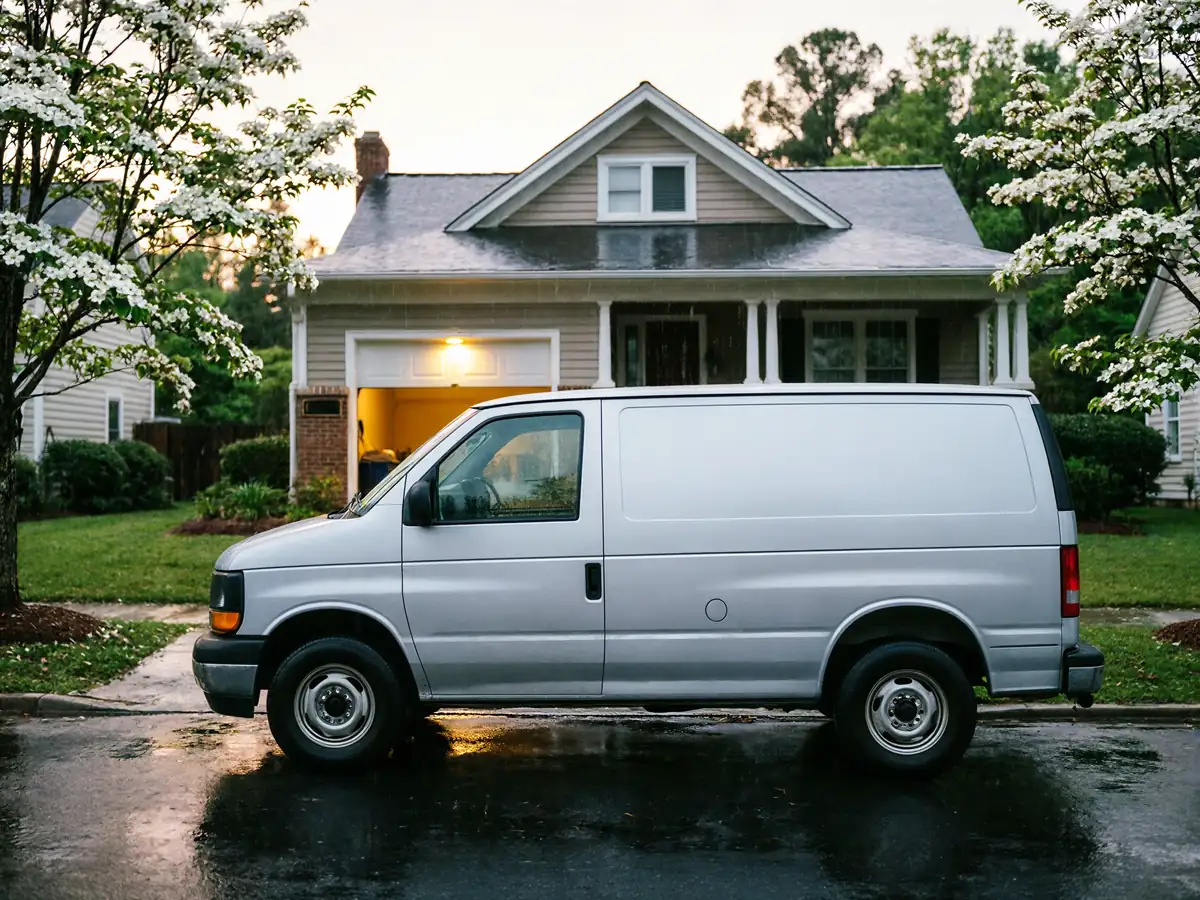
For torsion springs matched to a 1990s-era build, the truck carries standard wire-gauge torsion springs in the common residential weight ranges, winding bars, a torque wrench for cone tension, and spare cable and drums since those usually need attention at the same time a spring goes. We also carry extension springs for the smaller share of Angier doors that predate the torsion standard, though that's the exception here, not the rule.
What we don't carry is every custom spring length for a nonstandard or oversized door built outside factory spec - those sometimes need an order, and we'll tell you on site if that's the case rather than force a close-enough fit that throws the door's balance off.
Why It Happens Here
A median build year of 1997 puts a lot of Angier garage doors right in the window where original hardware starts failing. Torsion springs are rated by cycle count, not years, but a door opened a few times a day for two-plus decades lands most homeowners square in failure territory right now, this year, not five years from now and not twenty years ago.
The area's cold-but-moderate climate band adds a smaller factor: steel fatigues faster through repeated cold-to-warm swings than it would somewhere with a flatter temperature curve, though it's secondary to simple cycle count here. Across the roughly 2,532 households in Angier, a meaningful share are sitting on a spring that's either original or a first replacement nearing its own end - which is different math than you'd run in a neighborhood built forty years earlier, where most springs have already been swapped once or twice over.
Where This Job Goes Sideways
The usual way this goes wrong is a homeowner or a handyman tries to re-tension or reuse a spring that's already fatigued, gets the door moving again for a few weeks
And then it fails again - sometimes with the door half-open and loaded. On a torsion setup, a spring under tension that lets go wrong can snap a winding bar or whip a cable, and that's not a repair you want to improvise.
The other way it goes sideways is cost
We travel to Angier from Fuquay-Varina, about 6 miles, and if a job turns out to need a nonstandard spring length that isn't on the truck, that's a second trip. We'd rather tell you that up front than pretend every door is a stock fit.
- 6 miles
How to Book
If a spring's already broken, you'll know - the door won't lift, or it feels like it weighs three times what it should. Call and describe what you're seeing: whether the door is stuck down, whether you can see the spring (it's the coiled bar above the door, not the cables on the sides), and roughly how old the house is if you know it. That last detail helps us bring the right spring stock out to Angier the first trip instead of the second. See our general page on spring repair out of Fuquay-Varina for how we handle this across the rest of the service area, or our Angier repair page for other issues on the same door.
The DIY Question
Don't wind or unwind a torsion spring yourself. The tension stored in one of these, even on a single-car door, is enough to break bones if the winding bar slips, and that's true whether the spring is five years old or twenty-five. What you can safely do is look: check whether the spring is a single coil above the door (torsion) or a pair of long springs above the horizontal tracks (extension), and check whether it's visibly separated at a gap in the coil. That tells us what to bring.
Replacing cables, drums, or an end bearing plate yourself is also a bad trade of a small repair bill against a trip to the ER. If the door's just noisy or slow to close, that might be a track or roller issue you can look at yourself - a snapped spring isn't that kind of job.