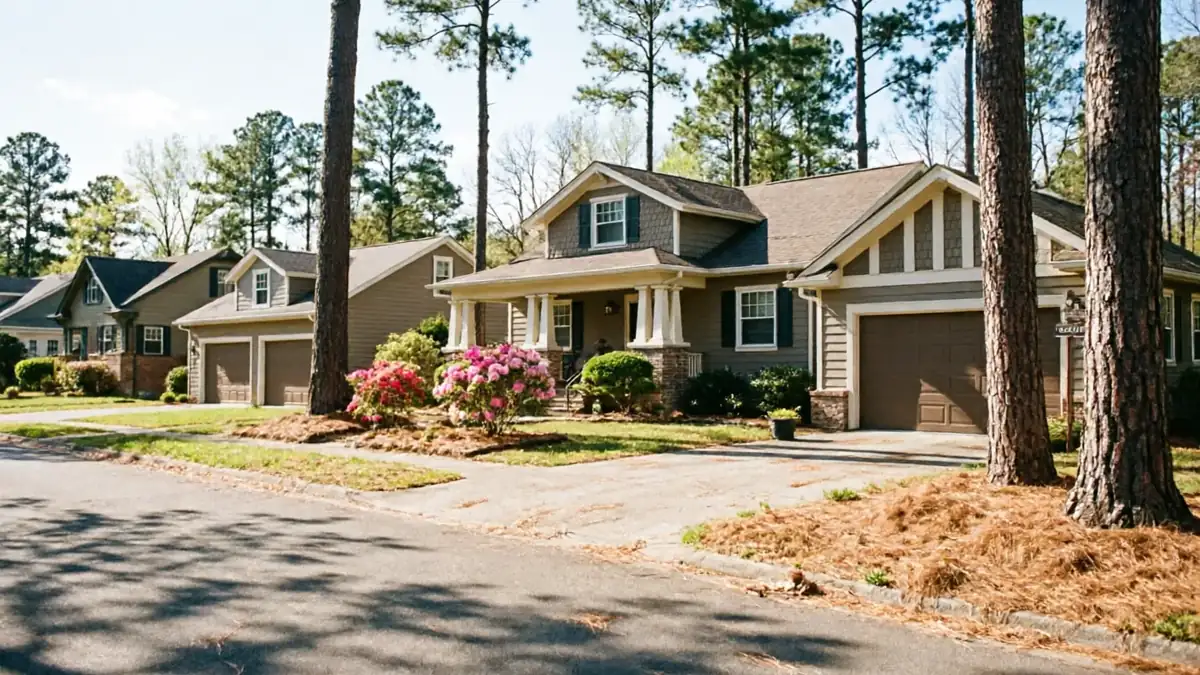
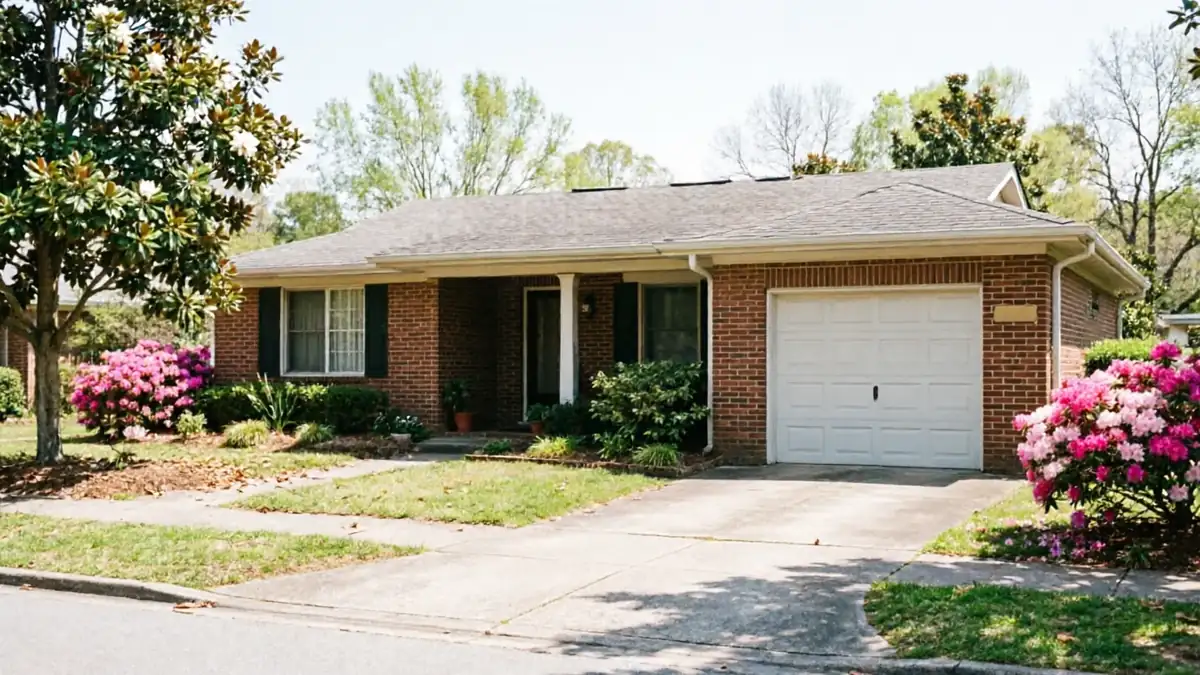
Most of the housing stock in this service area went up between 1959 and 2002, with a heavy concentration of 1960s and 70s builds spread across the seven towns we cover - Fuquay-Varina, Angier, Lillington, Buies Creek, Coats, Broadway, and Erwin. That era of construction leaned on steel rollers with plain bearings, or early nylon rollers that never held up the way the ball-bearing versions do now. Forty-plus years of thermal cycling in a cold-moderate climate band means the galvanized stems on those original rollers have corroded, pitted, or worn down to a shape that no longer rides the track cleanly. Add a track that's picked up a little rust from humidity swings and you get rollers that bind on the way up and slam on the way down. This isn't a defect in any one door. It's what happens to a roller that's been doing its job since the Carter administration. Newer builds in the area, post-2000, are less likely to show this specific failure yet, but they're not immune once the original hardware ages past the 20-year mark. The pattern holds across the service area because the housing eras line up, not because any one town is different from the next.
What You Are Seeing
The first sign is usually noise - a grinding or clicking that tracks with the door's movement, loudest right where the roller meets a bend in the track. Next comes a door that hesitates or jumps slightly as it passes the horizontal curve, because a flat-spotted or cracked roller can't roll smoothly through that transition. Some owners notice the door sitting a little crooked in the opening, which points to one or two rollers failing faster than the rest, usually the ones closest to the spring side where the load is heaviest. If a roller has actually split, you may find small chips of the old roller material on the garage floor near the track. On older stock with steel rollers, you might also see rust streaking down the track itself. None of this is an emergency the way a snapped cable is, but a roller that's worn enough to be loud is also worn enough to let the bracket pull sideways, and that eventually wears the track itself.
The DIY Question
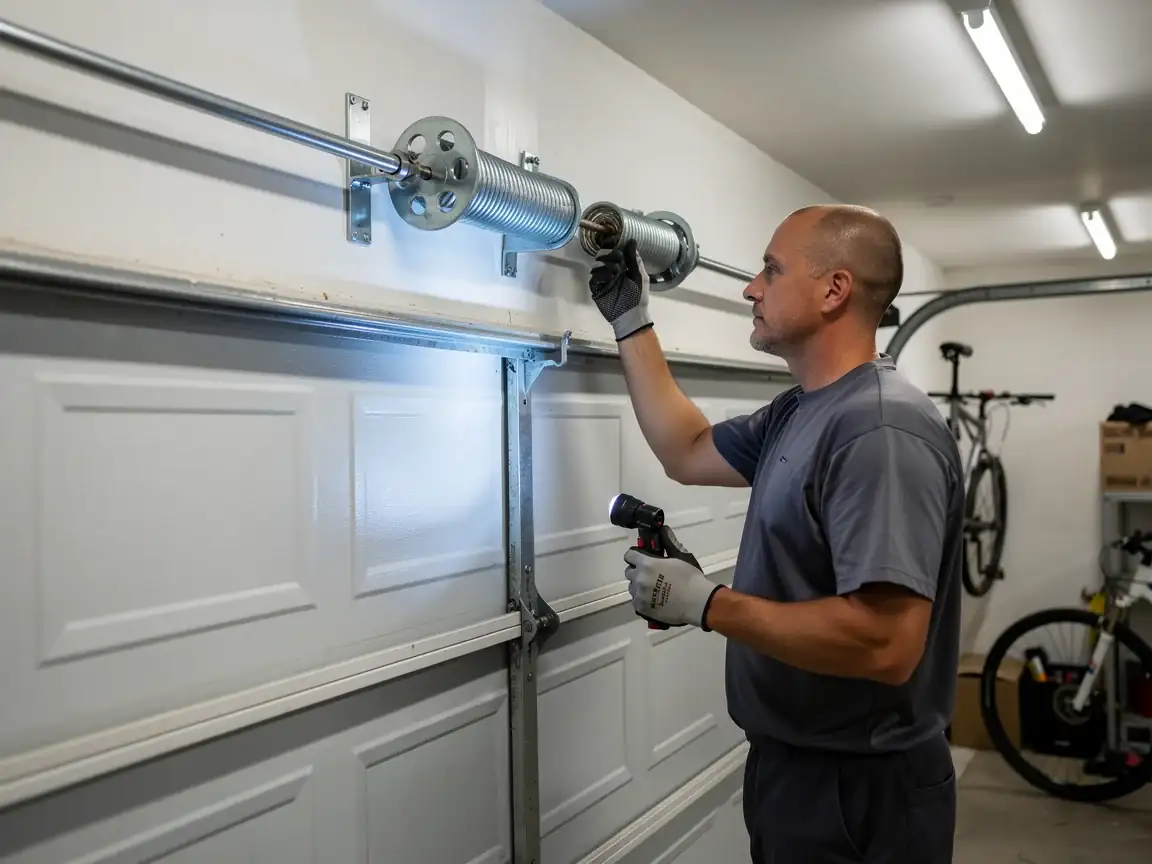
Rollers are one of the more approachable garage door parts to replace yourself, provided the door is only a single-panel section or two of rollers and the door isn't under spring tension at the point you're working. Bottom rollers, away from the cables, are usually the safer starting point for a homeowner with the right tools. Top rollers and anything near the spring-loaded side of a torsion system are a different matter - the bracket there often holds cable tension, and pulling the wrong bolt on a loaded system can snap a finger or worse. We won't pretend every roller swap needs a truck; a single bottom roller on a door that's otherwise sound is a reasonable weekend job if you're comfortable with hand tools. Where we draw the line is full sets on older doors with corroded track, because by then the hinges and brackets are usually due too, and doing it piecemeal just means paying for a second visit.
What the Fix Involves
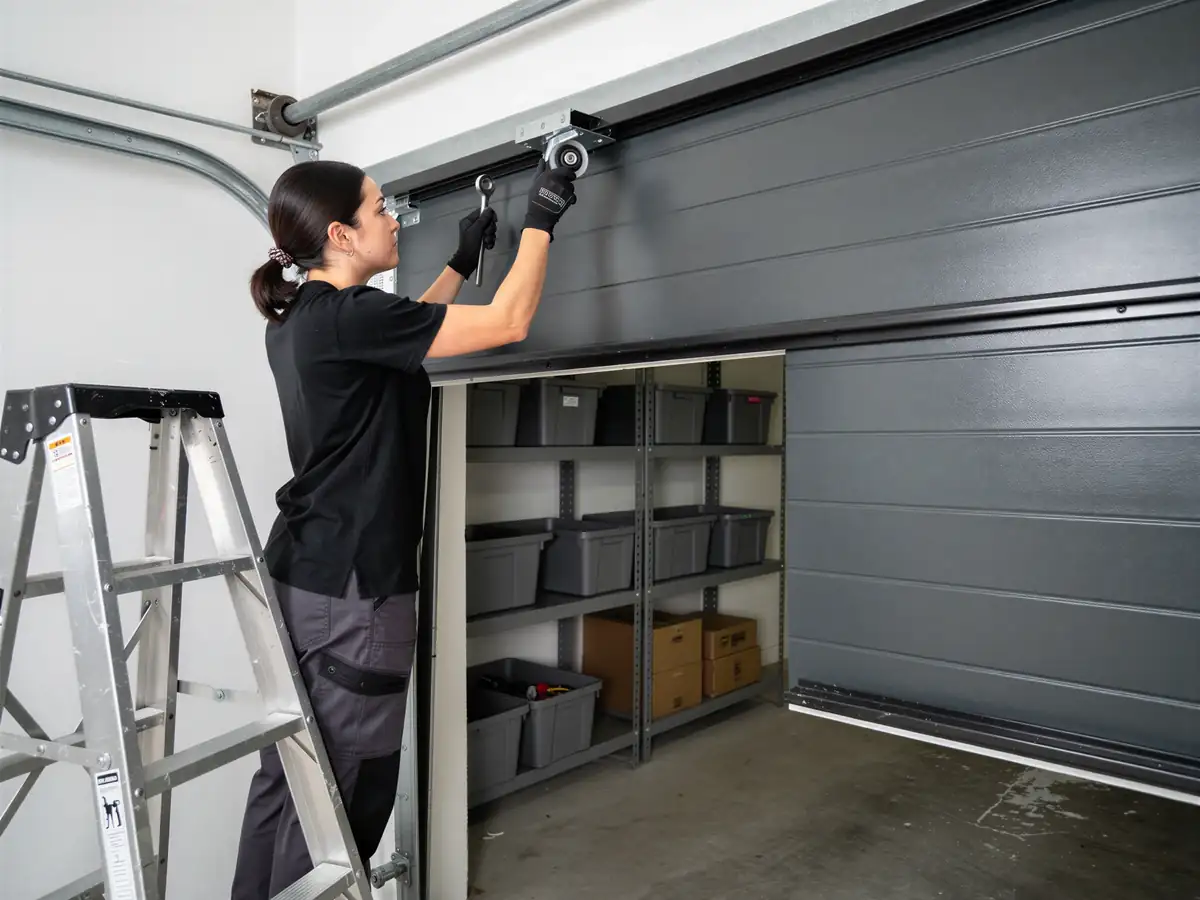
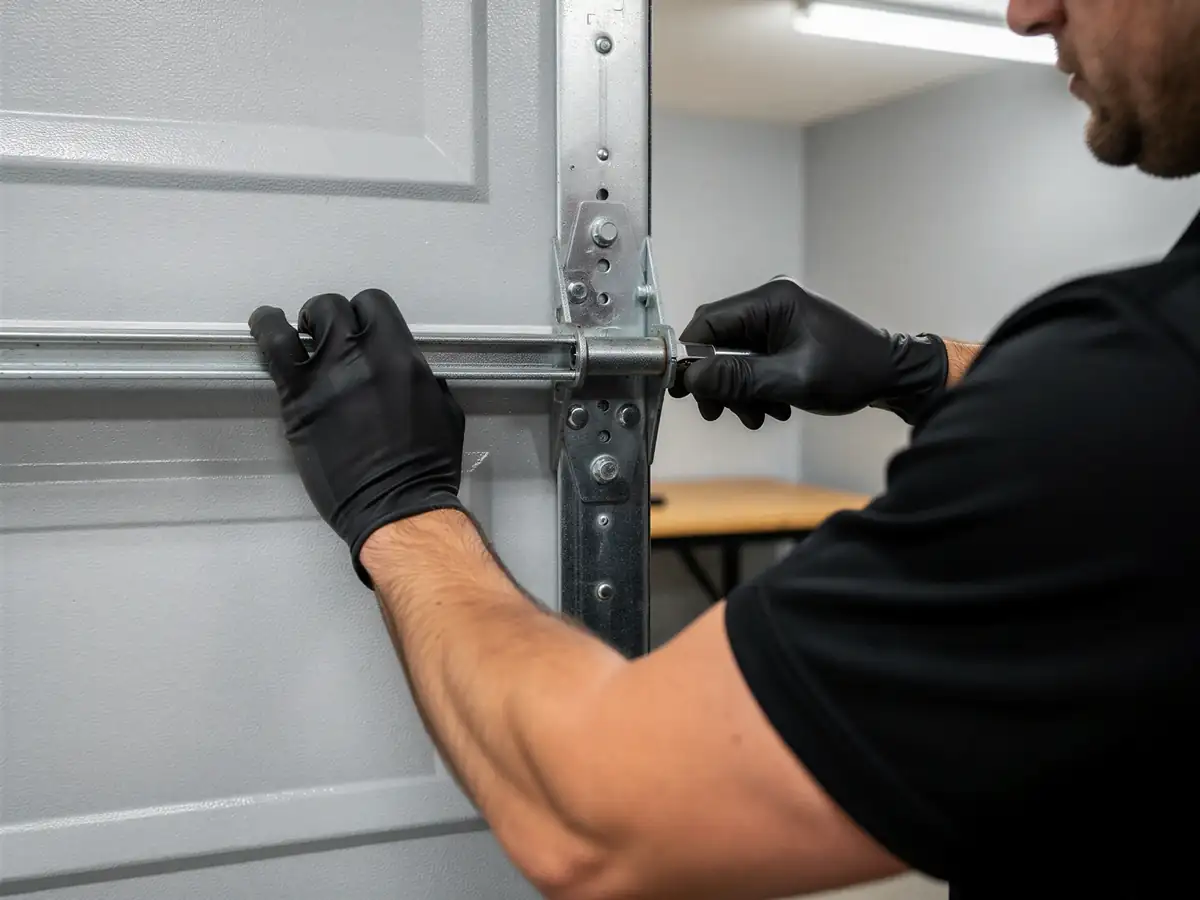
A full roller replacement means pulling each roller stem from its hinge or bracket one at a time, checking the hinge pivot holes for wear while they're off, and setting new rollers before the next section drops out of alignment. On the homes common to this area - 1960s through early-2000s builds - we're also checking the track mounting itself, since four-plus decades of use loosens lag bolts and can leave the track slightly bowed. Nylon rollers with sealed ball bearings are the standard replacement now; they run quieter and don't pit the way the old steel ones did. We adjust the track gap after installing new rollers, because a track set too tight on fresh rollers will just wear them down again inside a year. A full set on a two-car door usually runs an hour or so once we're on site, assuming the track itself doesn't need straightening or replacing.
How it works
From “it’s stuck” to “it’s fixed”
01
Tell us what’s wrong
Describe the symptom - won’t open, loud bang, opener runs but the door won’t move.
02
On-site diagnosis
A technician tests the door under power and by hand and finds what actually failed.
03
Clear, up-front plan
You get the fix that’s needed and what drives the cost - before any work starts.
04
Repaired & tested
The repair is done, the door is set true and tested, and the work area left clean.
Not sure which repair your door needs in Fuquay-Varina, NC? Describe what it’s doing - every job starts with a diagnosis.
How do I know if it's the rollers and not the opener?
If the door makes noise specifically where it curves onto the horizontal track, and the opener runs quiet when the door is disconnected and moved by hand, that points to rollers rather than the opener motor or logic board.
Can I replace just the worn rollers and leave the rest?
Yes, if the hinges and track are in decent shape. On older homes in this area it's common to replace rollers first and only move to track or hinge work if that doesn't resolve the noise or binding.
Why do rollers wear out faster on older houses around here?
Houses built in the 1960s and 70s commonly still have original steel or early nylon rollers. Four-plus decades of cold-season contraction and expansion wears the stems and bearings well past the point newer sealed rollers would show.
Ready to get your garage door sorted?
Tell us what it’s doing and where you are in Fuquay-Varina - we’ll take it from there.