Why It Happens Here
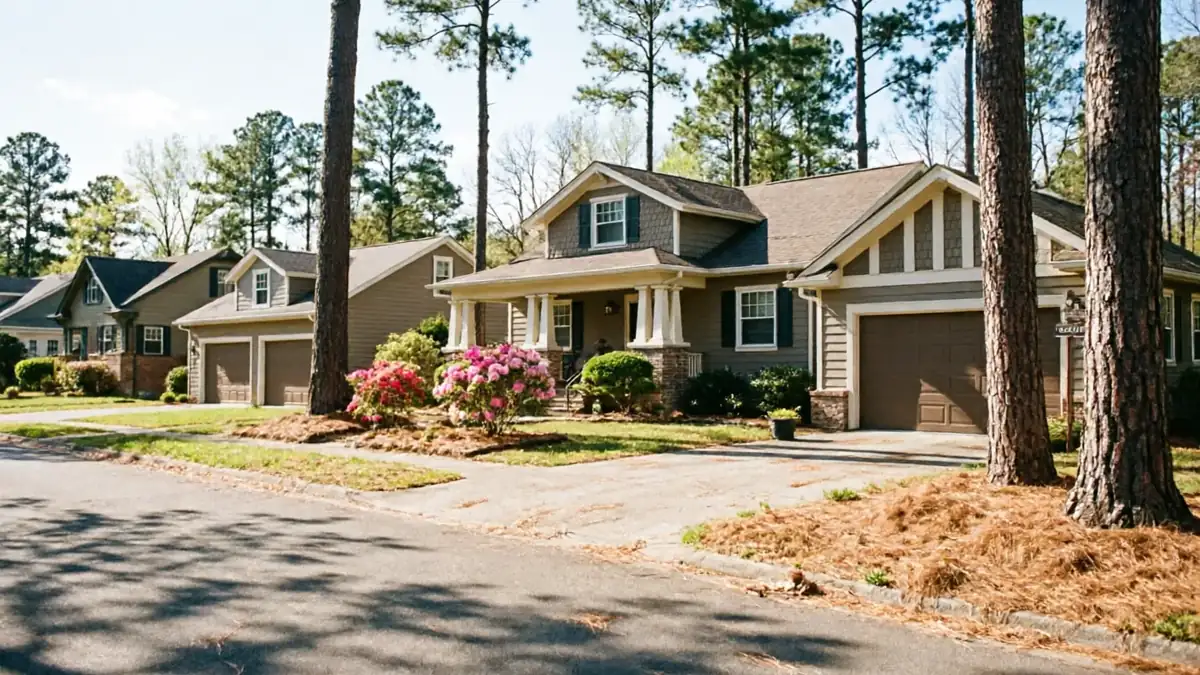
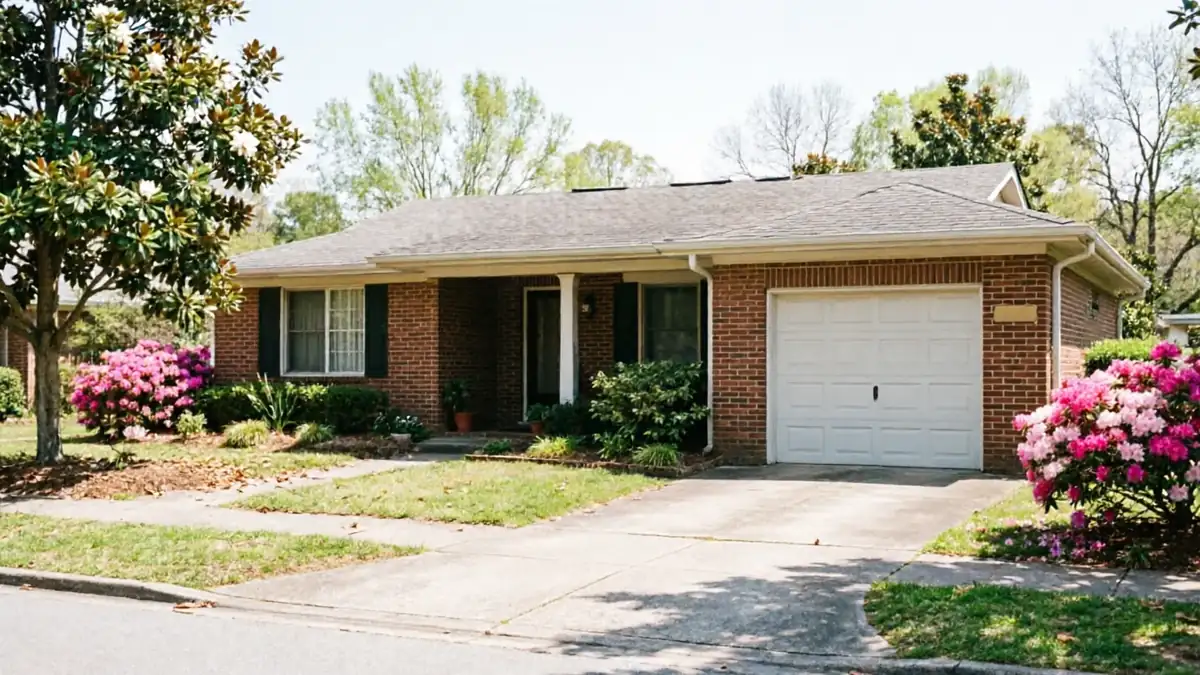
Most houses in and around Fuquay-Varina went up between 1959 and 2002
With the median landing around 1979, so a lot of openers in this area are original units nearing or past their service life. That's forty-plus years on a motor, a drive gear, and a set of safety sensors that were never built to last that long.
Across the seven areas we cover
Angier, Lillington, Buies Creek, Coats, Broadway, Benson, and Erwin - the bulk of the housing stock dates to the 1960s and 70s, which means the same aging chain-drive openers show up job after job. It's not bad luck. It's the age of the garage.
Fuquay-Varina sits in a cold-moderate climate band
So the grease in a decades-old drive gear thickens every winter and strips teeth that were already worn thin. Add a few humid summers and the circuit boards on those original units take a beating too. None of this is dramatic failure, just slow wear that finally gives out.
What You Are Seeing
The opener runs but the door doesn't move, or it moves a few inches and stops. You hear the motor working harder than it used to, a grinding or clicking that wasn't there a year ago. The remote works from across the room sometimes and not at all other times. The wall button triggers the light but not the carriage.
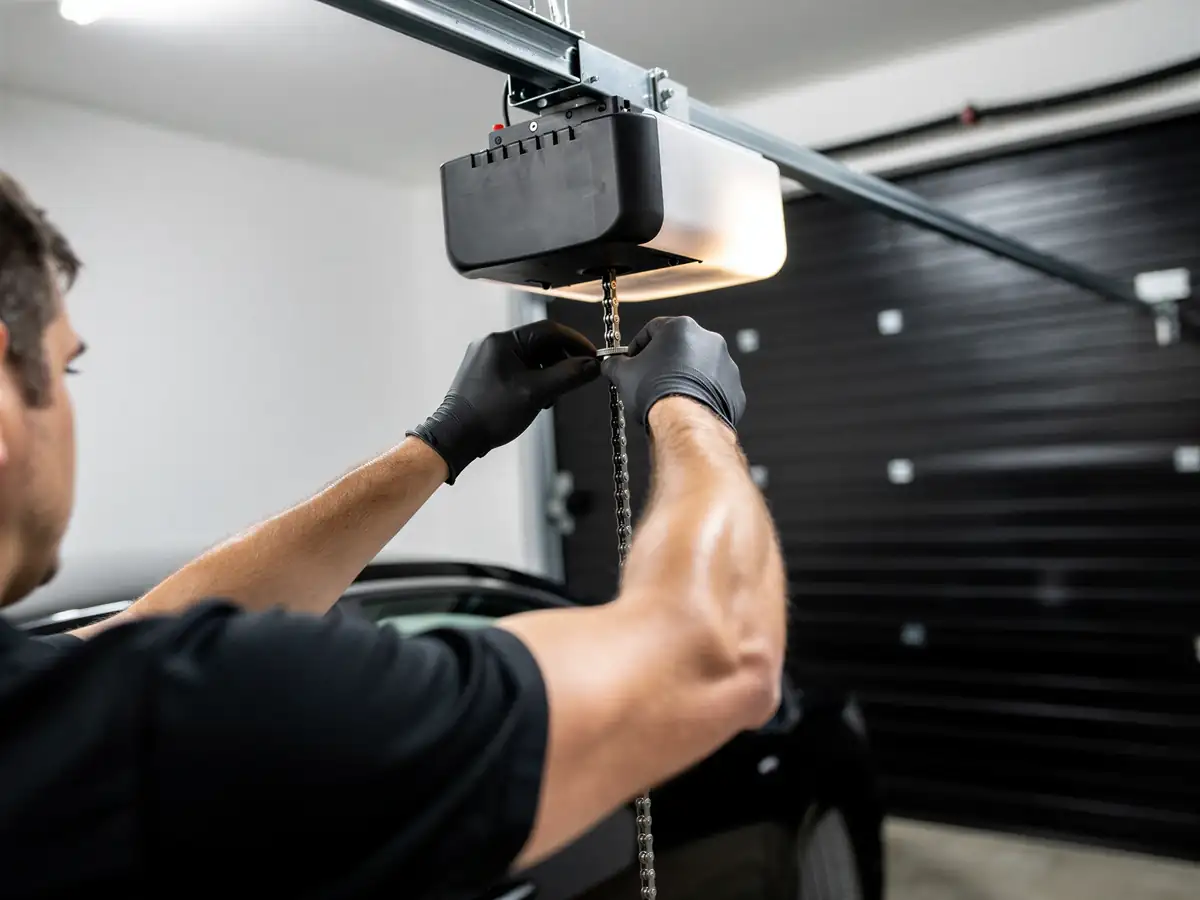
On a lot of the older homes we visit, the opener is a chain-drive unit with a worn sprocket, a stretched chain, or a logic board that's lost its memory of the remotes programmed to it. Newer safety standards also mean some of these old units no longer have working photo-eye sensors, which is a separate problem from the motor itself but shows up at the same time.
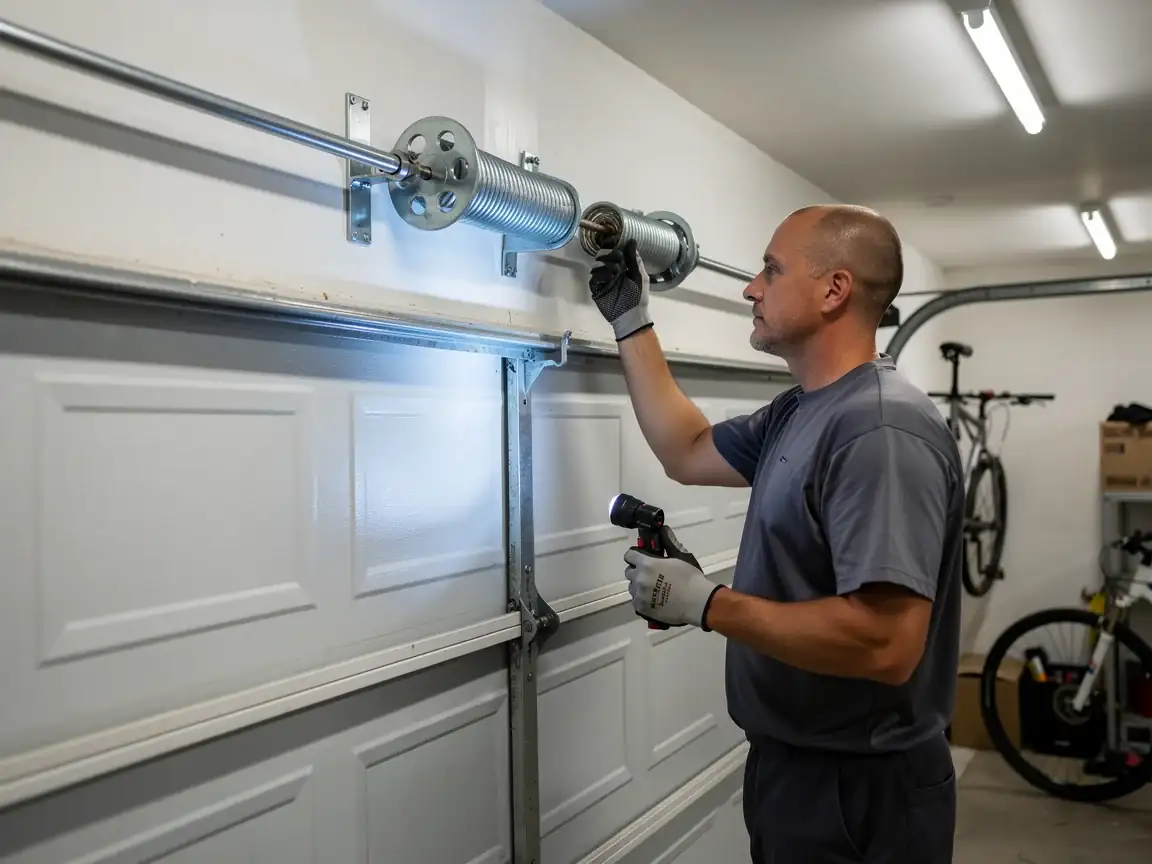
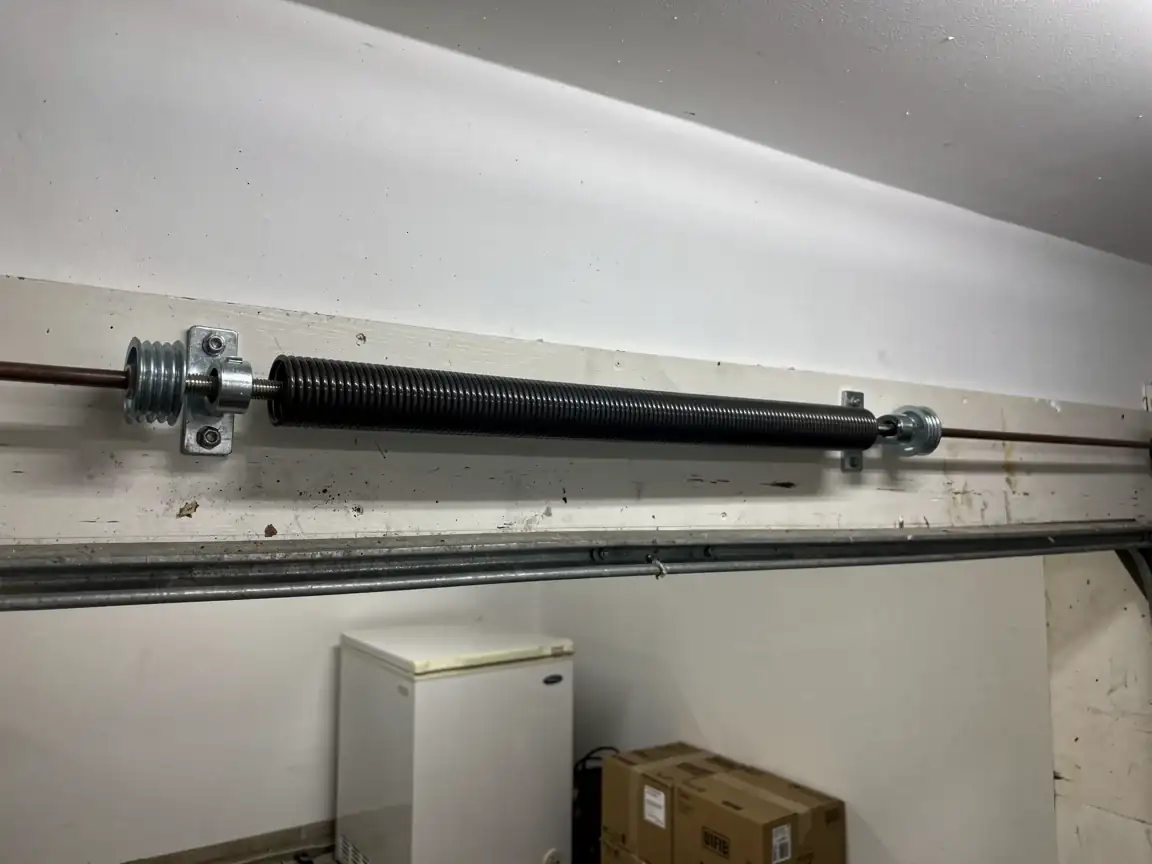
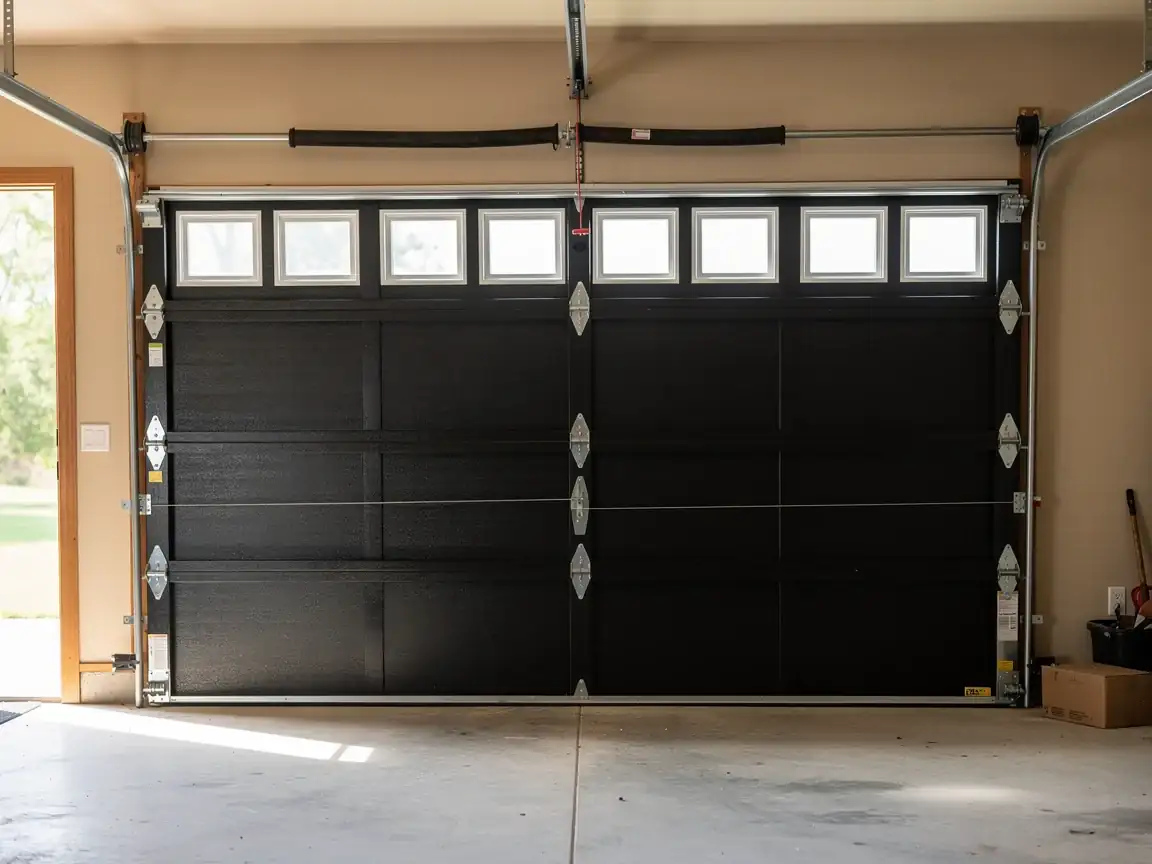
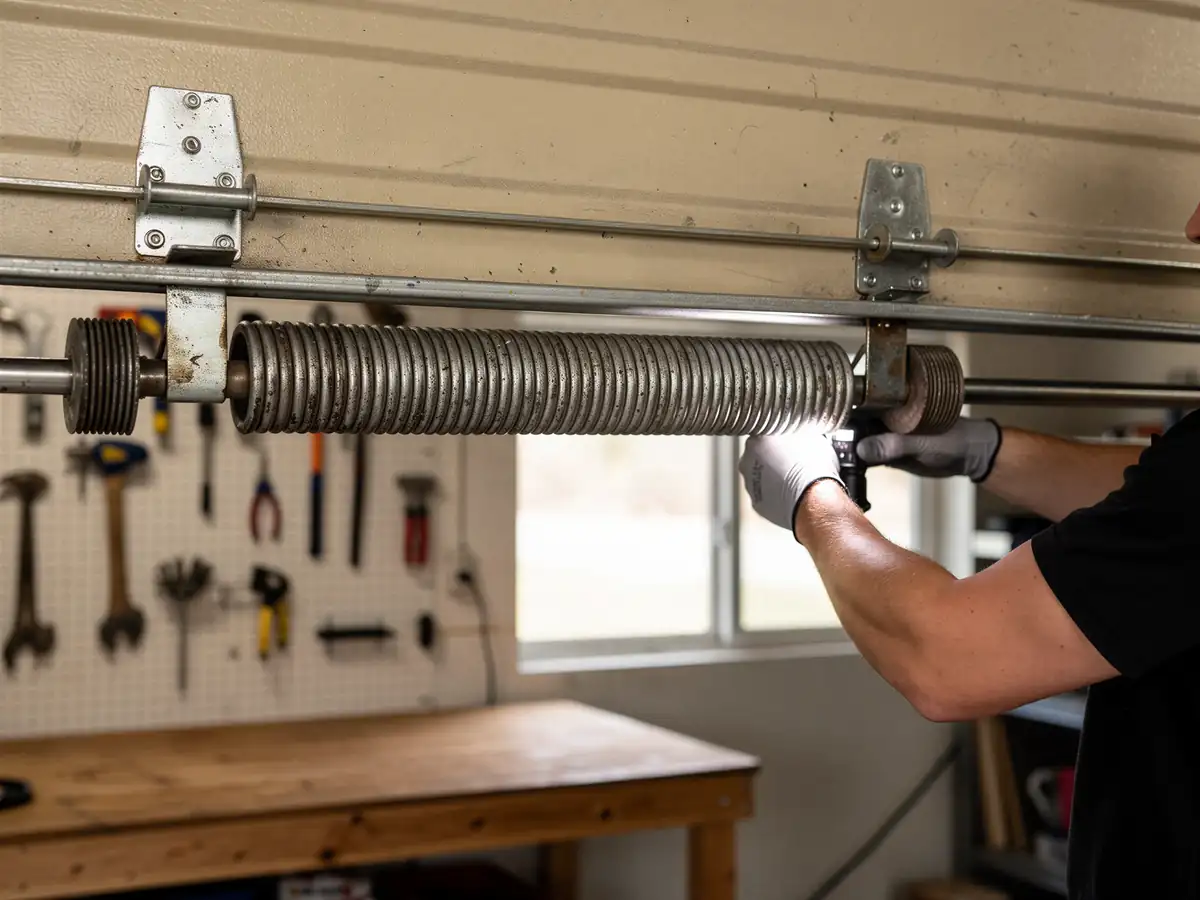
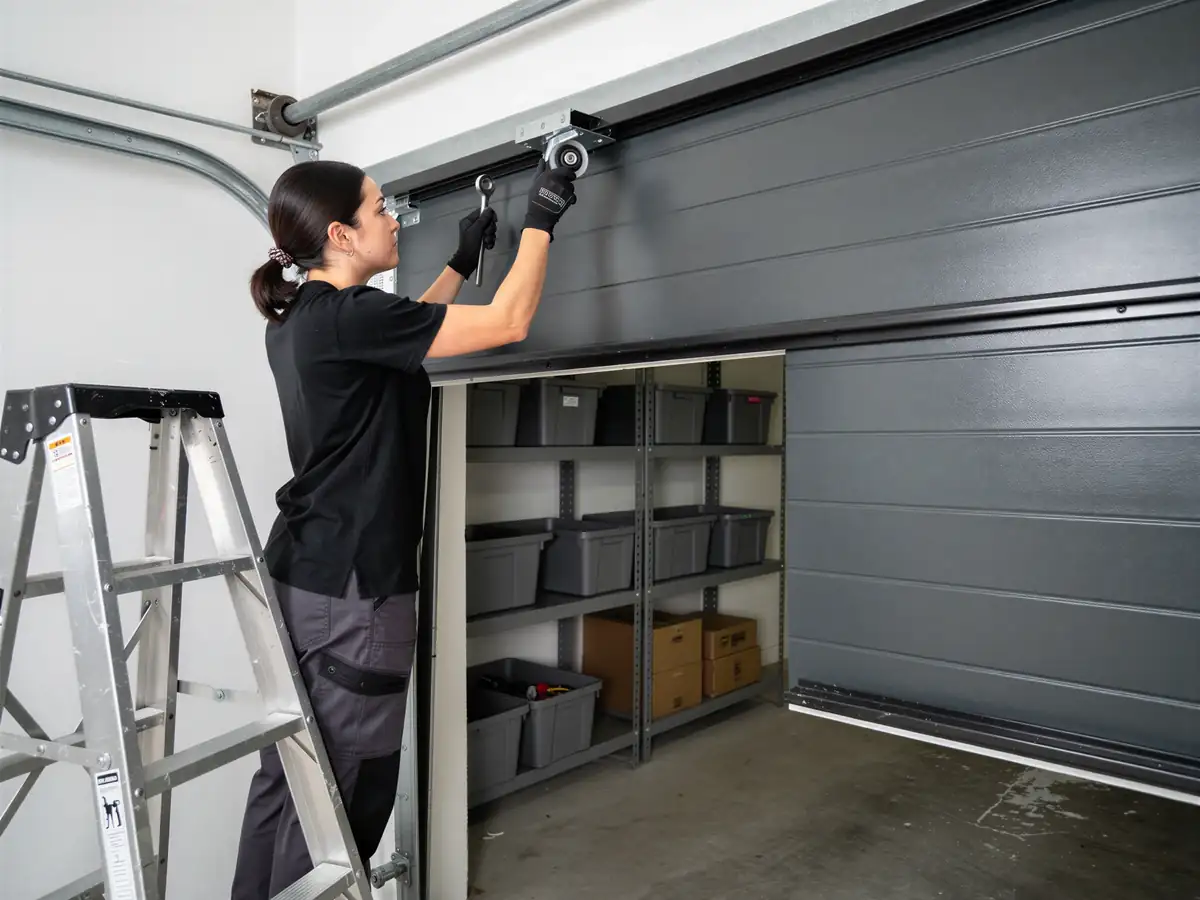
Sometimes what looks like an opener problem is actually a spring or cable issue, and the opener is just the part straining hardest to compensate. We check both before we quote anything, because replacing an opener on a door that's out of balance just wears out the next one faster.
The DIY Question
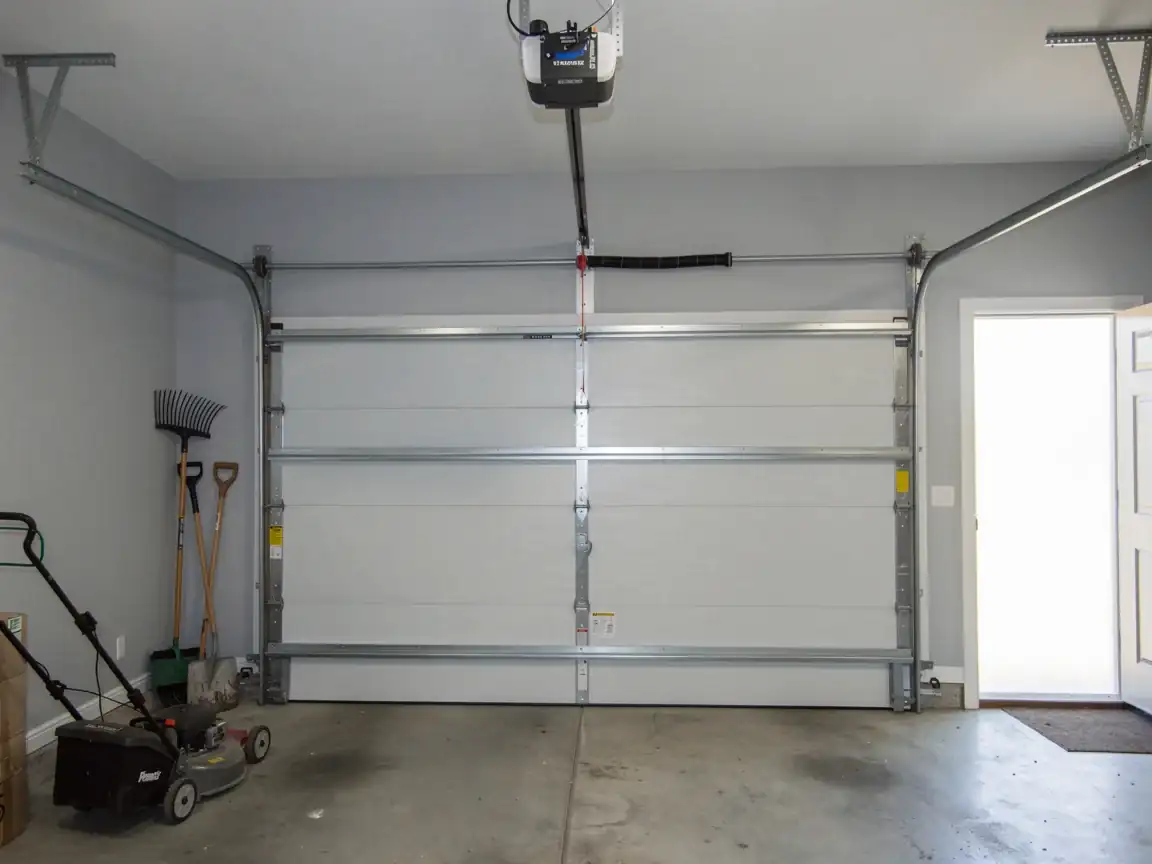
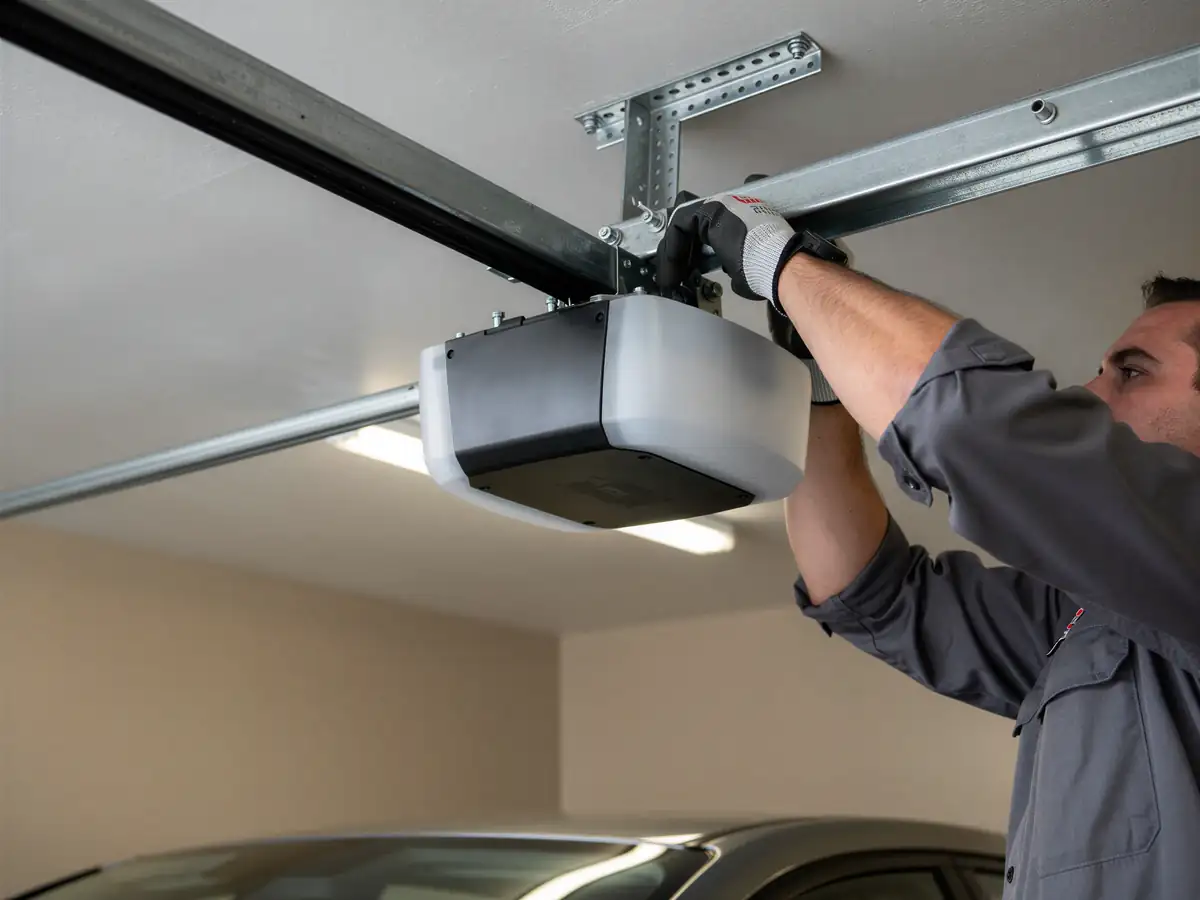
Swapping a wall button or reprogramming a remote is a reasonable weekend job. Replacing the opener unit itself is a different animal - you're dealing with a chain or belt drive under tension, a header bracket that has to be mounted square, and wiring for safety sensors that has to be aimed correctly or the door won't close at all.
We'll say plainly: if your current opener is original to a house built in that 1960s-70s window, the mounting hardware and header bracket are often not the same gauge or spacing as what ships with a new unit. That mismatch is where a lot of DIY installs go sideways, not in the wiring.
We don't talk anyone out of trying. We do tell people honestly when a repair isn't worth it versus a full swap - if the motor's dead but the track and springs are sound, a straight opener replacement is usually the cheaper and more durable path than patching an old unit.
What the Fix Involves
A proper opener installation starts with checking the door itself
Springs, cables, rollers - because a new motor on a door that's out of balance will fail early no matter how good the unit is. From there we remove the old header bracket and rail, mount the new one square to the frame, and run the drive to the door arm.
At a median household income of $52,458 across our service area
Most owners we talk to want a straightforward belt or chain-drive replacement rather than the priciest smart opener on the shelf, and that's a fair call. Belt drives run quieter, chain drives cost less, both hold up fine in this climate.
- $52,458 median household income
With roughly 4,607 owner-occupied houses among the 9,860 households we serve
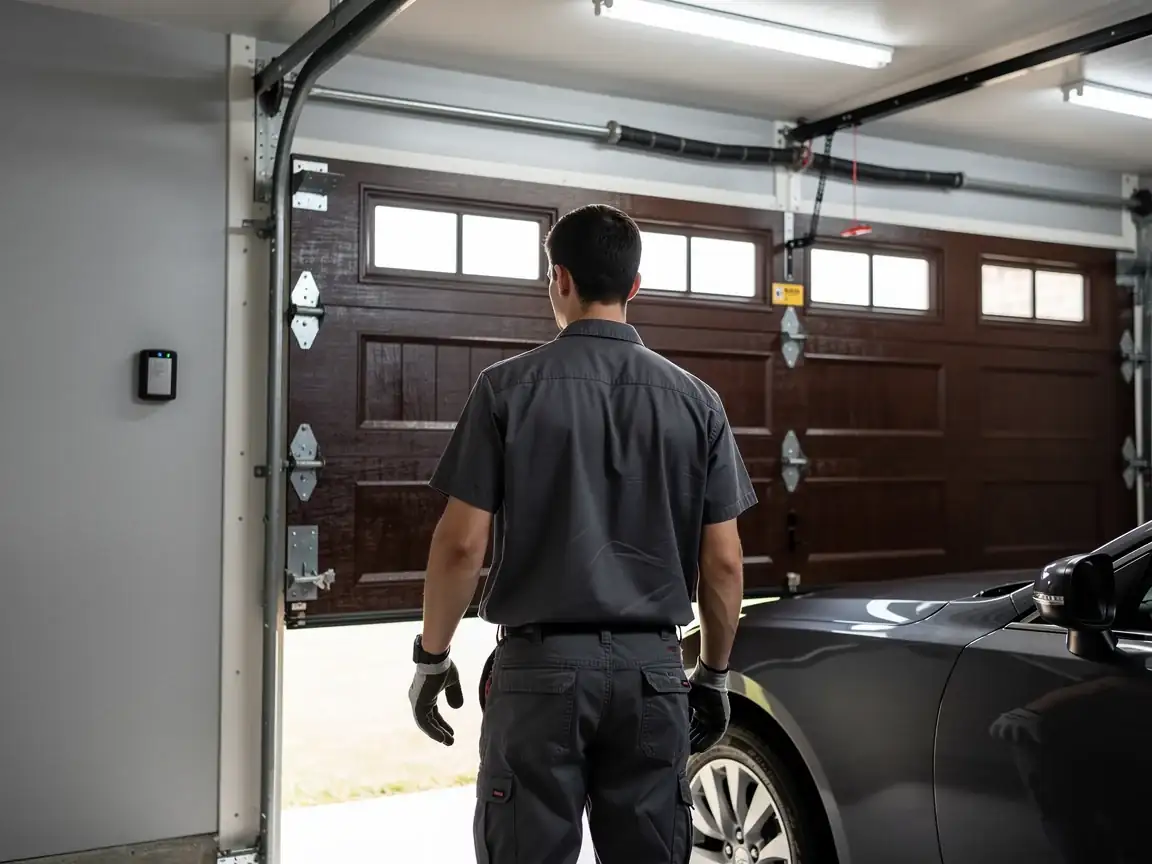
A sizable share of those garages still run the opener that came with the house. Once the new unit is set, we program the remotes and wall controls, set the travel limits, and test the safety reverse before we call the job done.
- 4,607 owner-occupied
- 9,860 households