Why It Happens Here
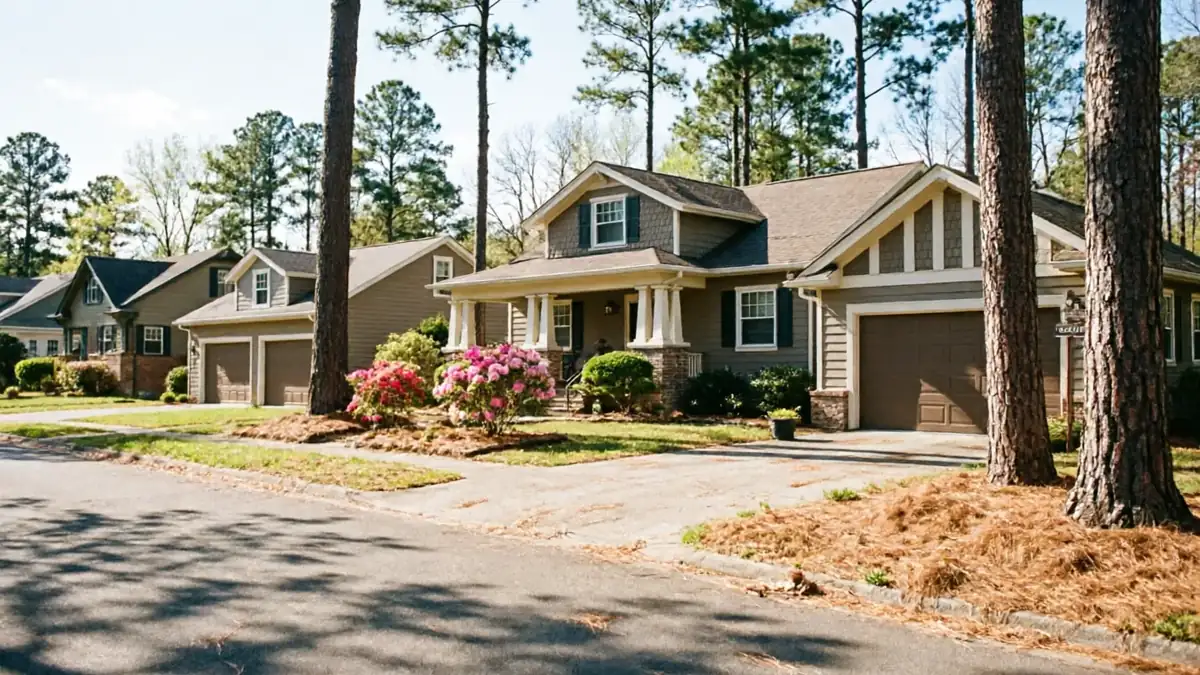
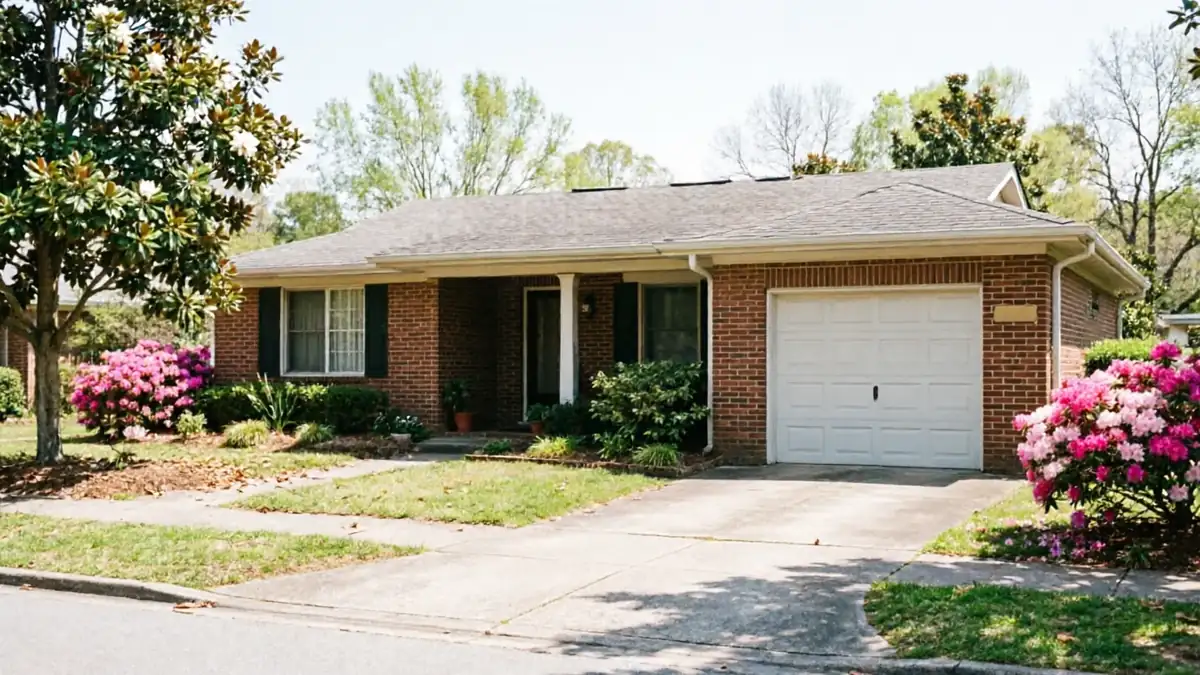
Most of the houses we work on in this area went up between 1959 and 2002
With a lot of that stock clustered in the 1960s and 70s across the seven towns we cover - Angier, Lillington, Buies Creek, Coats, Broadway, Benson, and Erwin. That matters for springs because a torsion or extension spring is rated for a set number of open-close cycles, usually somewhere around 10,000, and a door installed in 1975 has been through a lot of those cycles by now, often with the original spring still on it if nobody's touched it.
The other piece is climate
This is a cold-moderate band, not the deep freeze you get further north, but we still see real swings - cold snaps that stiffen the steel and tighten the coil, followed by warm stretches that let it relax again. That expansion and contraction cycle, repeated every winter for 40-plus years on an original spring, is what finally snaps a coil that looked fine the week before. It's not one dramatic event. It's decades of ordinary weather doing ordinary wear on hardware nobody budgeted to replace.
We're not saying every older door is a ticking clock
Plenty of owners had springs replaced along the way. But if your house falls in that 1960s-70s band and you don't know the spring's age, the odds are not in your favor.
What You Are Seeing
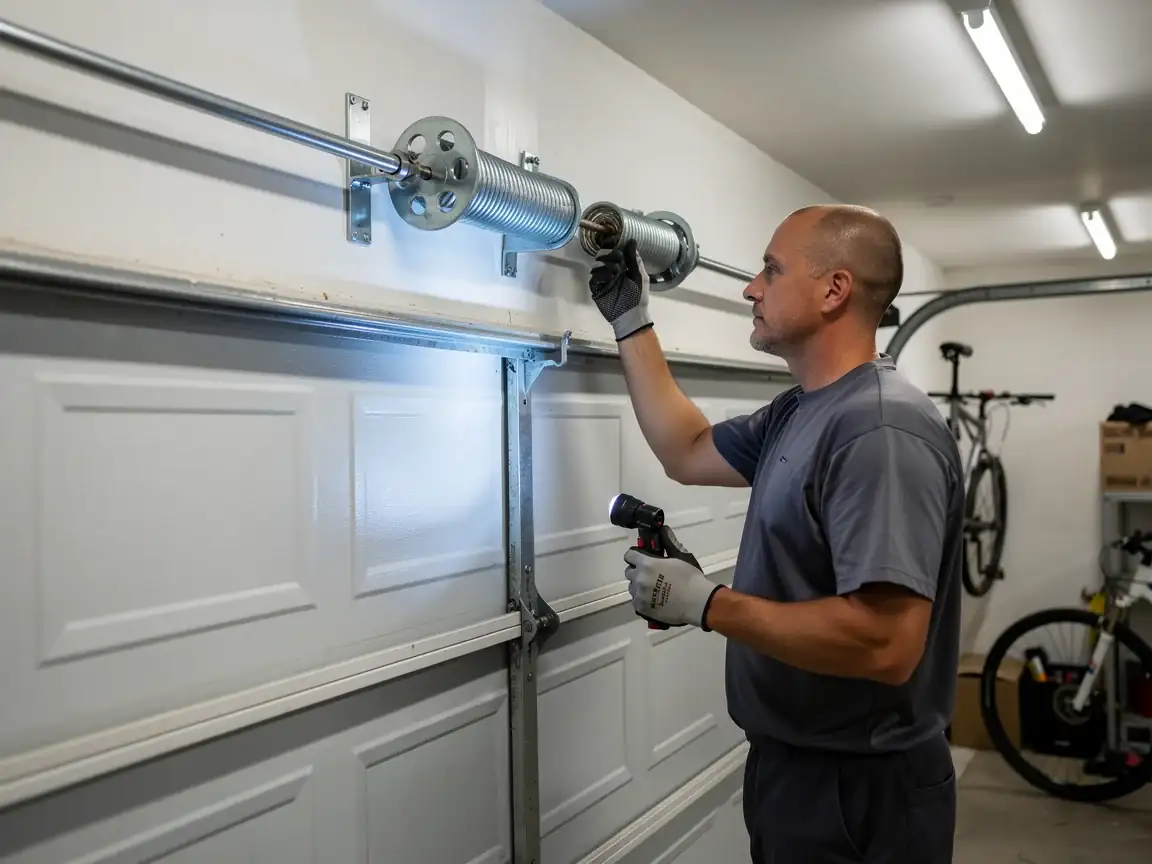
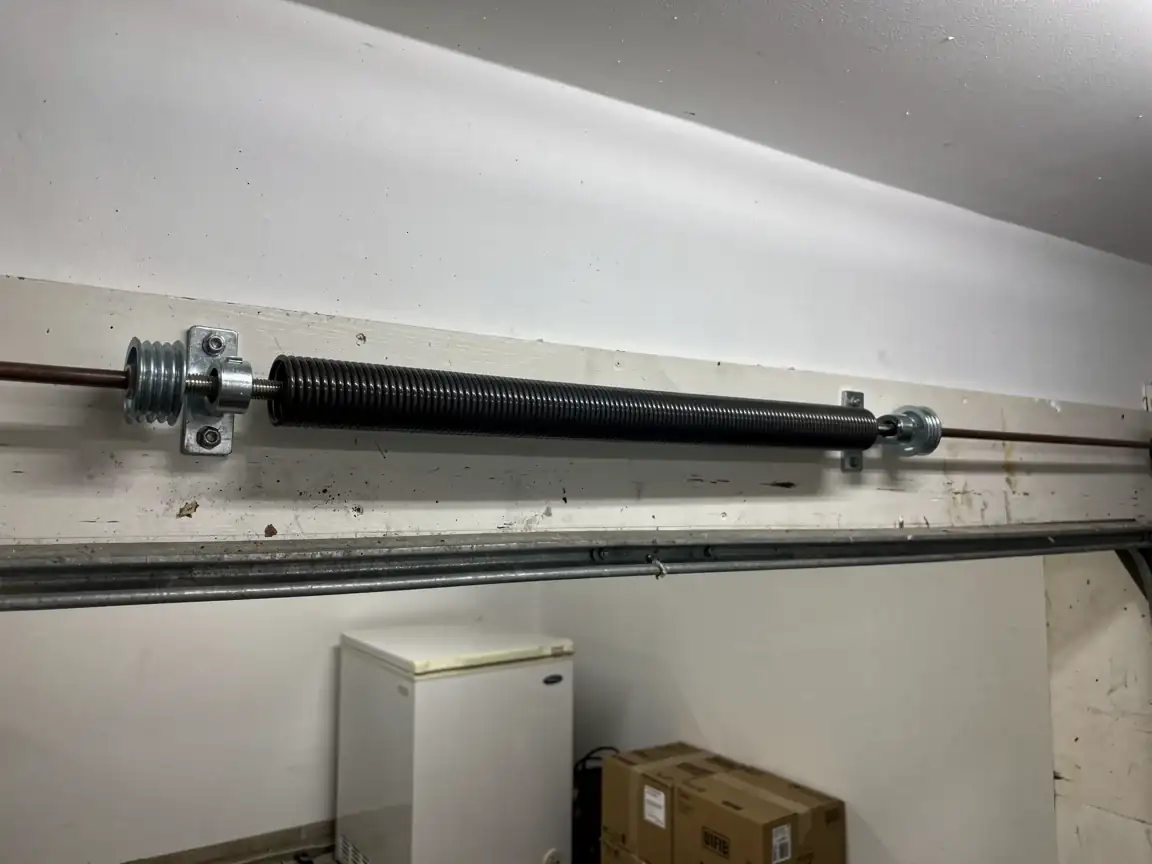
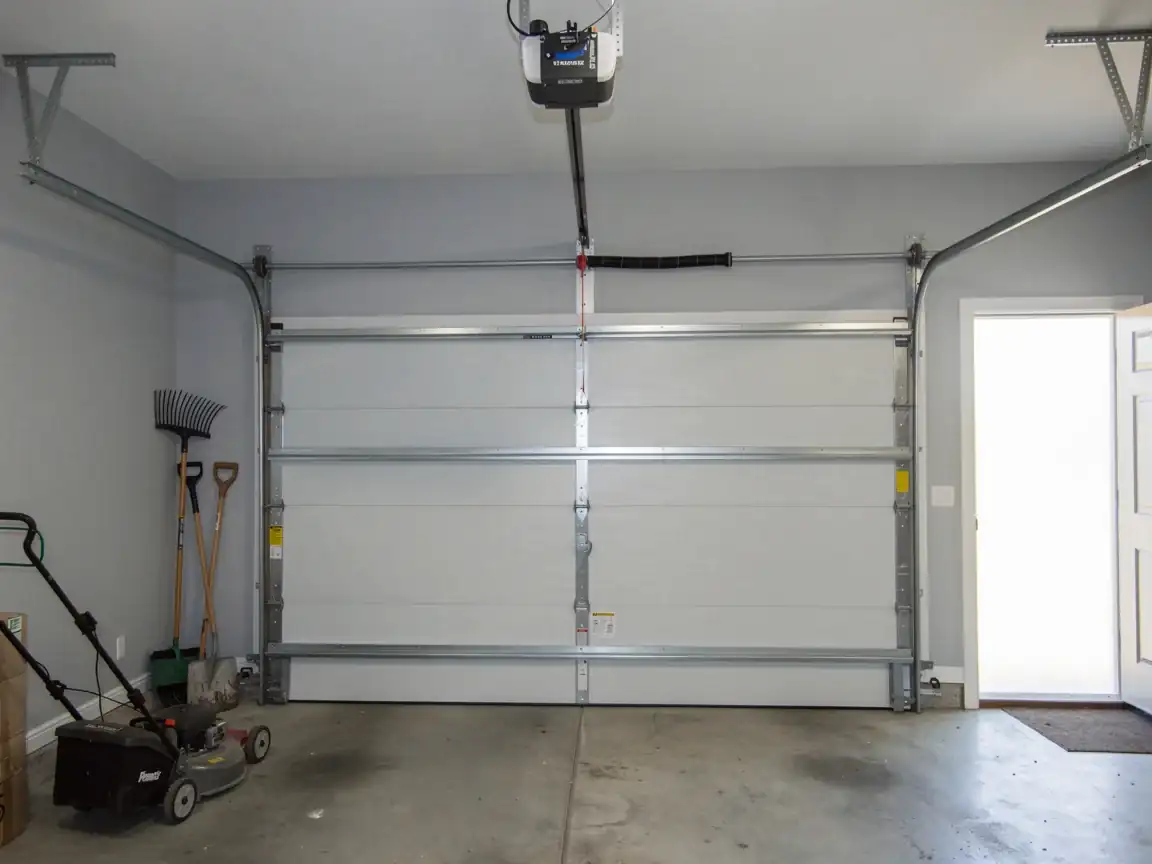
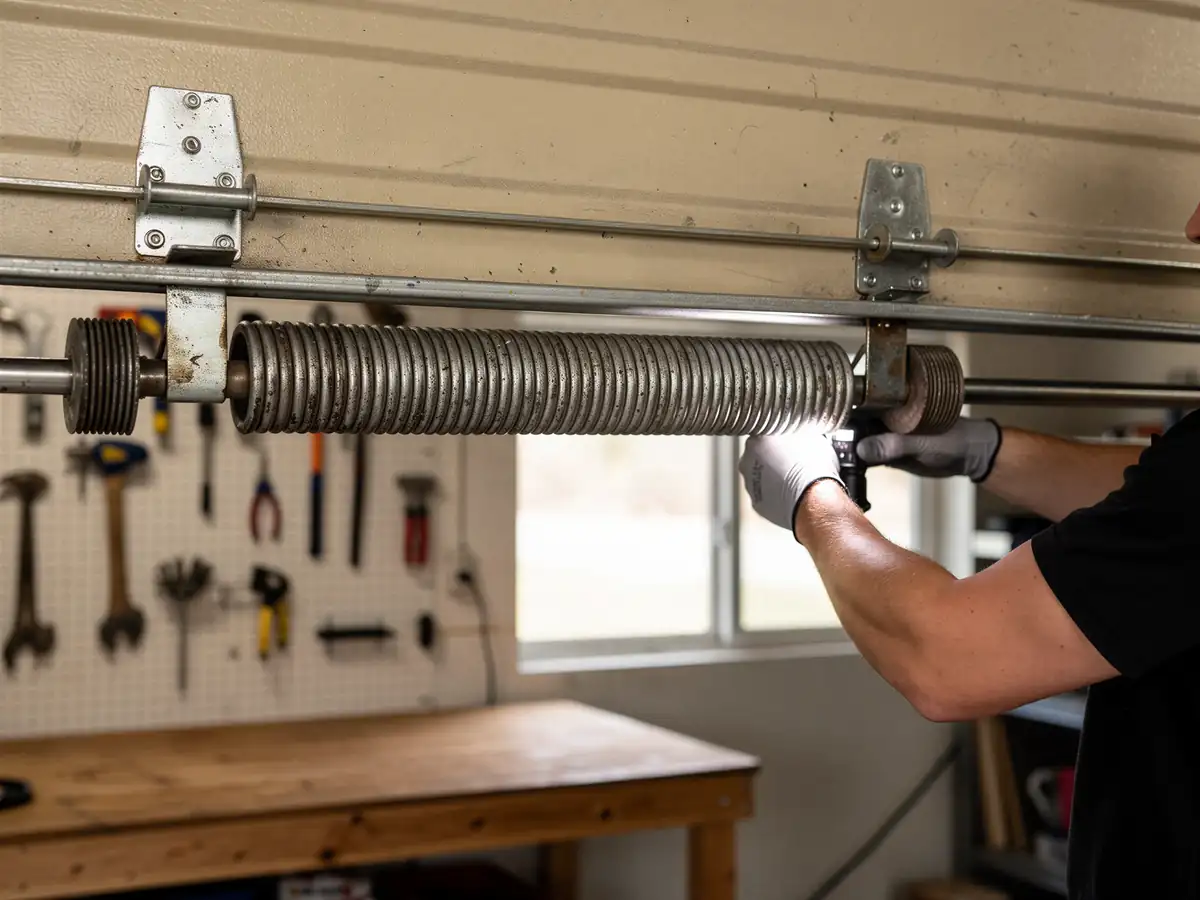
A broken torsion spring usually announces itself the same way: the door won't budge, or it starts up and slams back down, or the opener strains and reverses like it hit something. Look up at the spring bar above the door - if you see a visible gap in the coil, that's your answer.
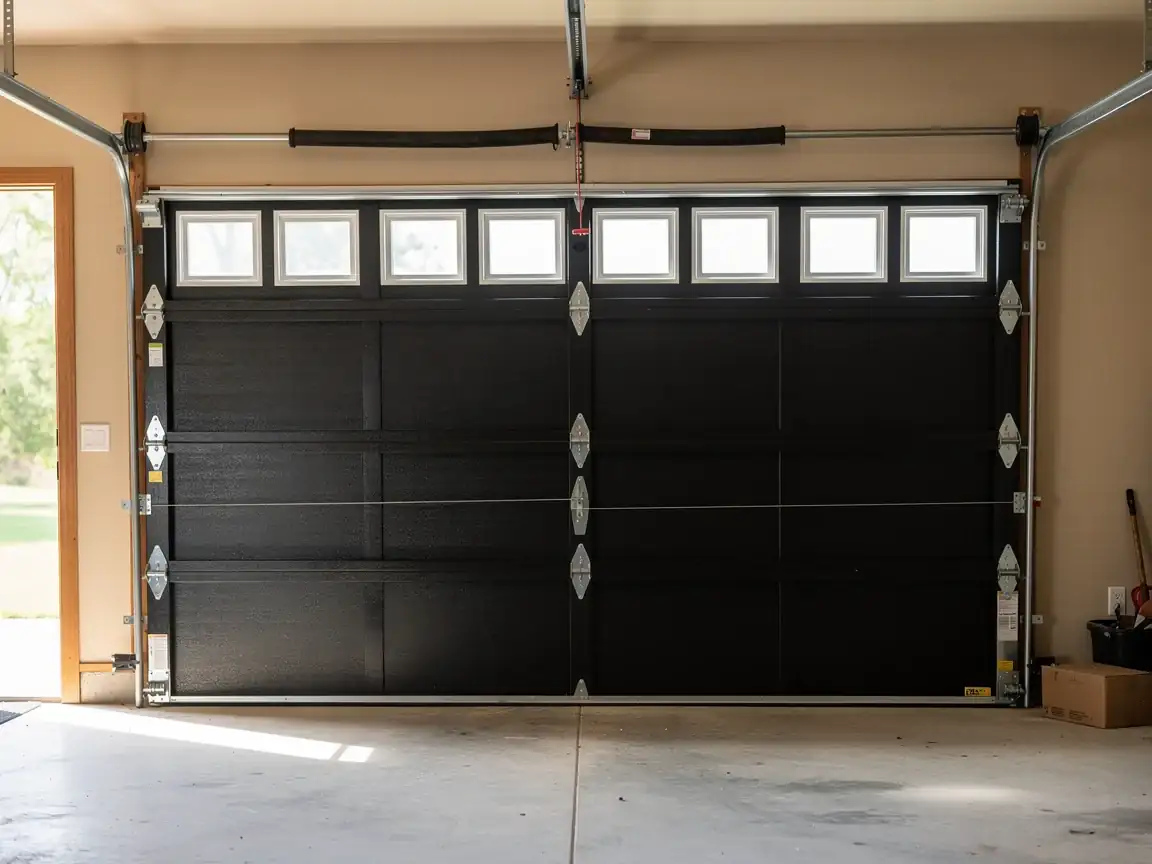
Extension springs, the kind that run along the horizontal tracks on either side of an older door, fail differently. One side goes first, so the door tries to open crooked, racking in the tracks and sometimes popping a roller out. If you've got exposed extension springs without safety cables running through them, that's original 1970s-era hardware and it's worth flagging regardless of whether it's broken yet.
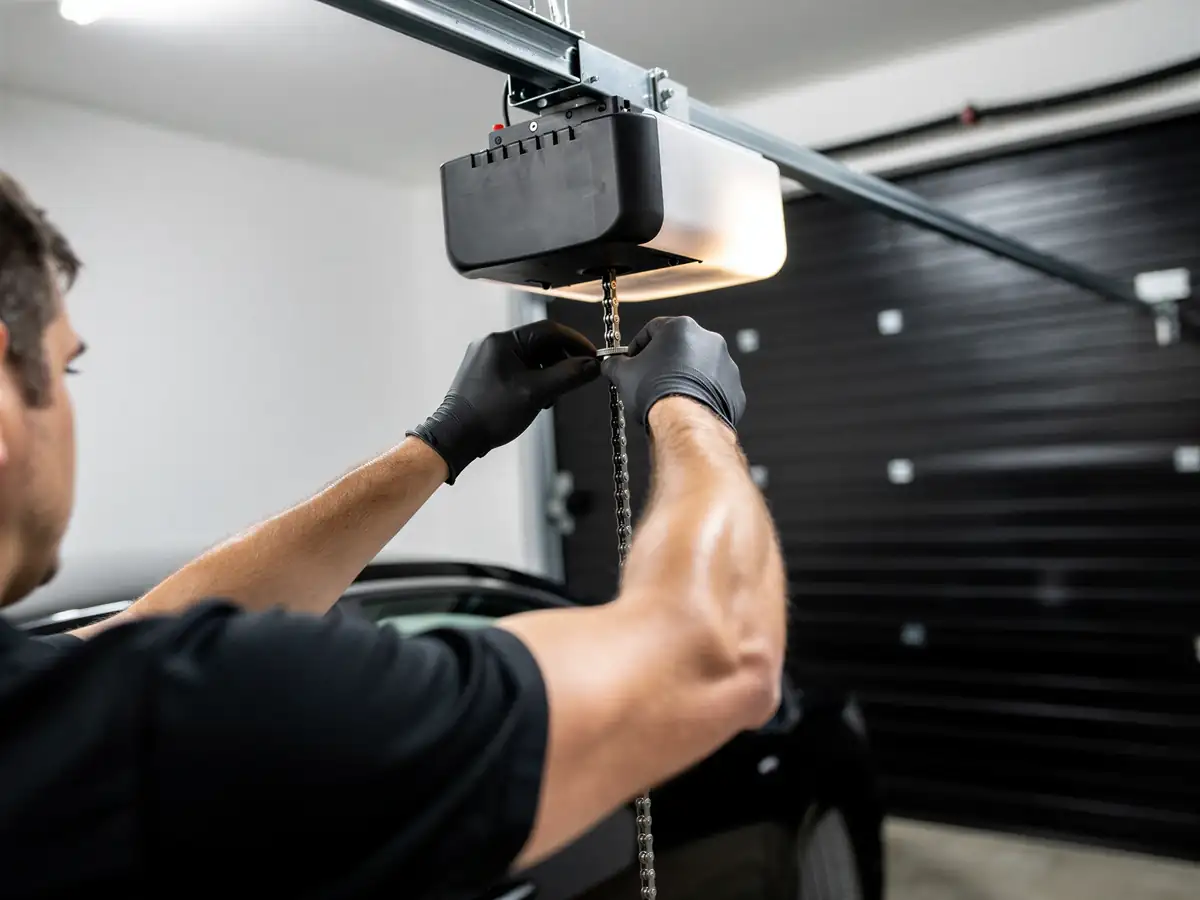
Either way, a dead spring means the opener is lifting the full weight of the door alone - something it was never built to do for long. A few cycles like that and you risk burning out the motor or stripping the gear, turning a spring job into a spring-plus-opener job. The sound alone is a decent early warning: a loud bang from the garage, especially on a cold morning, is almost always a spring letting go rather than anything else.
The DIY Question
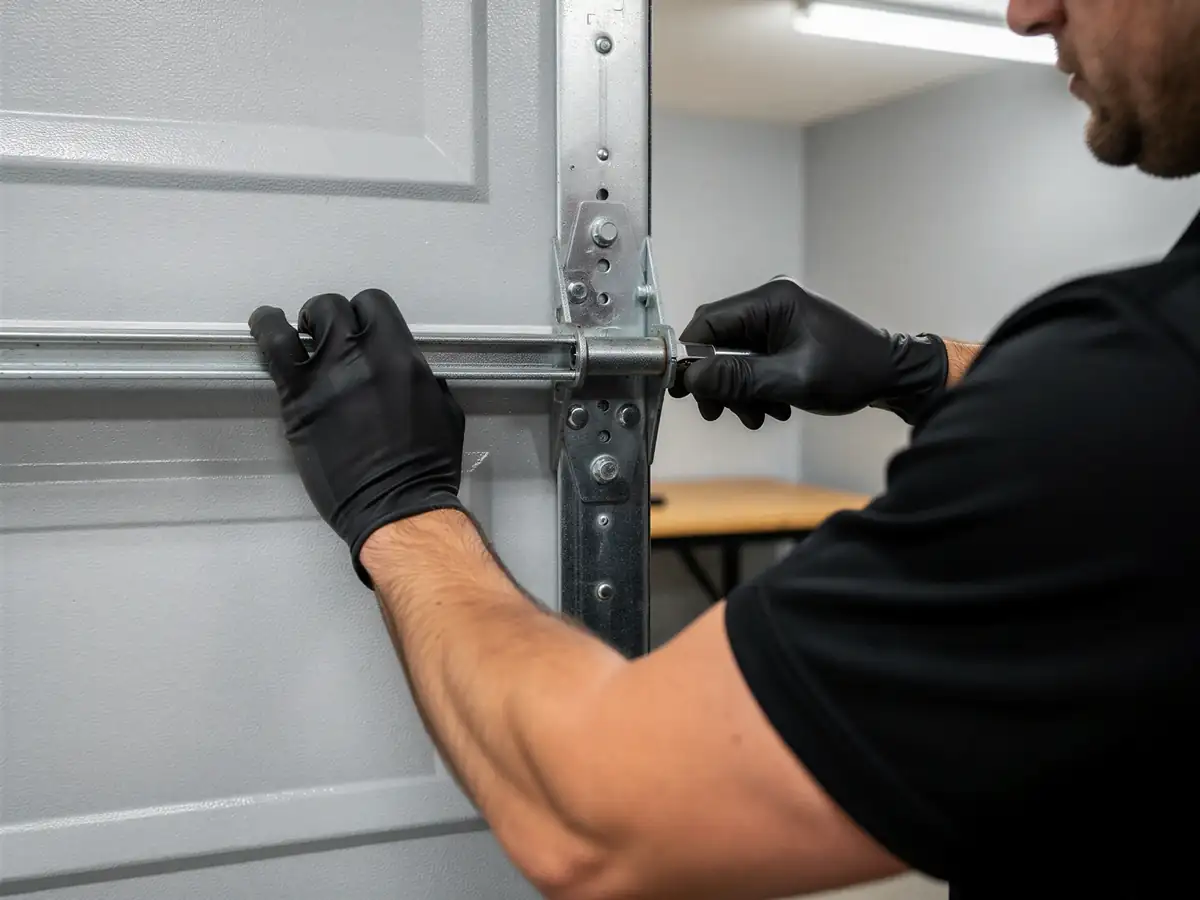
We'll say it plainly: torsion spring replacement is not a weekend project, and we'd rather tell you that than sell you a kit. A wound torsion spring holds enough stored force to break fingers or worse if the winding bars slip, and the tools for doing it safely aren't things most households own. Extension springs are a little more forgiving to look at, but the cables and pulleys around them carry their own risk if the door is still partly weighted.
What you can safely do yourself: check the spring visually for a gap, listen for the signs above, and disconnect the opener's emergency release so you're not forcing a motor against a dead spring. Beyond that, this is a job where the right bars, the right spring rate for your door's weight, and knowing how many turns to wind matter more than confidence.
One honest limitation on our end - if your door is heavily rusted or the track is badly bent from someone forcing it open on a broken spring, a spring swap alone won't fix it, and we'll tell you that up front rather than replace a spring on hardware that needs more work.
What the Fix Involves
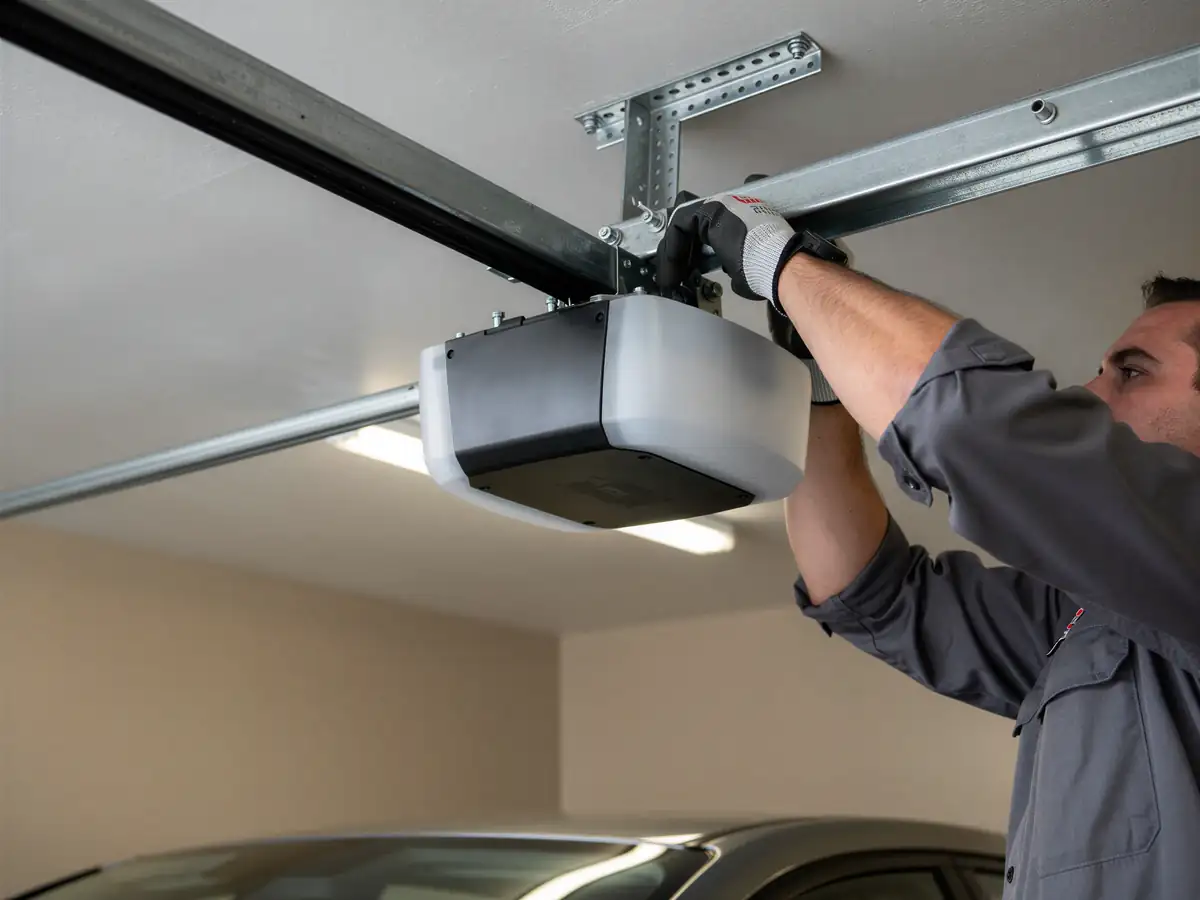
For a torsion spring, the job is matching the new spring's wire size, length, and wind to what your door and opening actually weigh
Not just swapping in whatever was there, since a mismatched spring either won't lift the door fully or will wear out fast. We check both springs even if only one broke, since the surviving one from the same install is usually close behind it on cycle count.
For extension springs, we also look at the safety cables
If the original setup doesn't have them, we add them while we're in there, since a spring letting go without a cable running through it can send it across the garage.
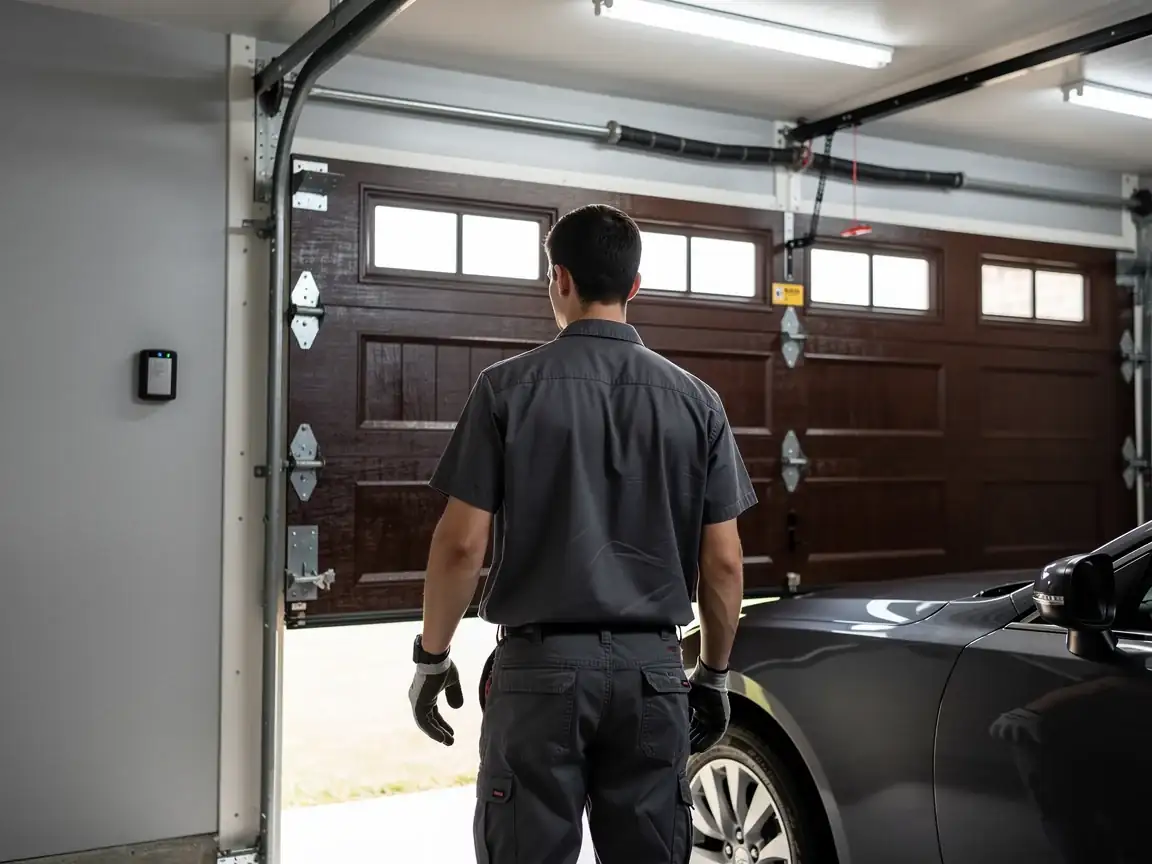
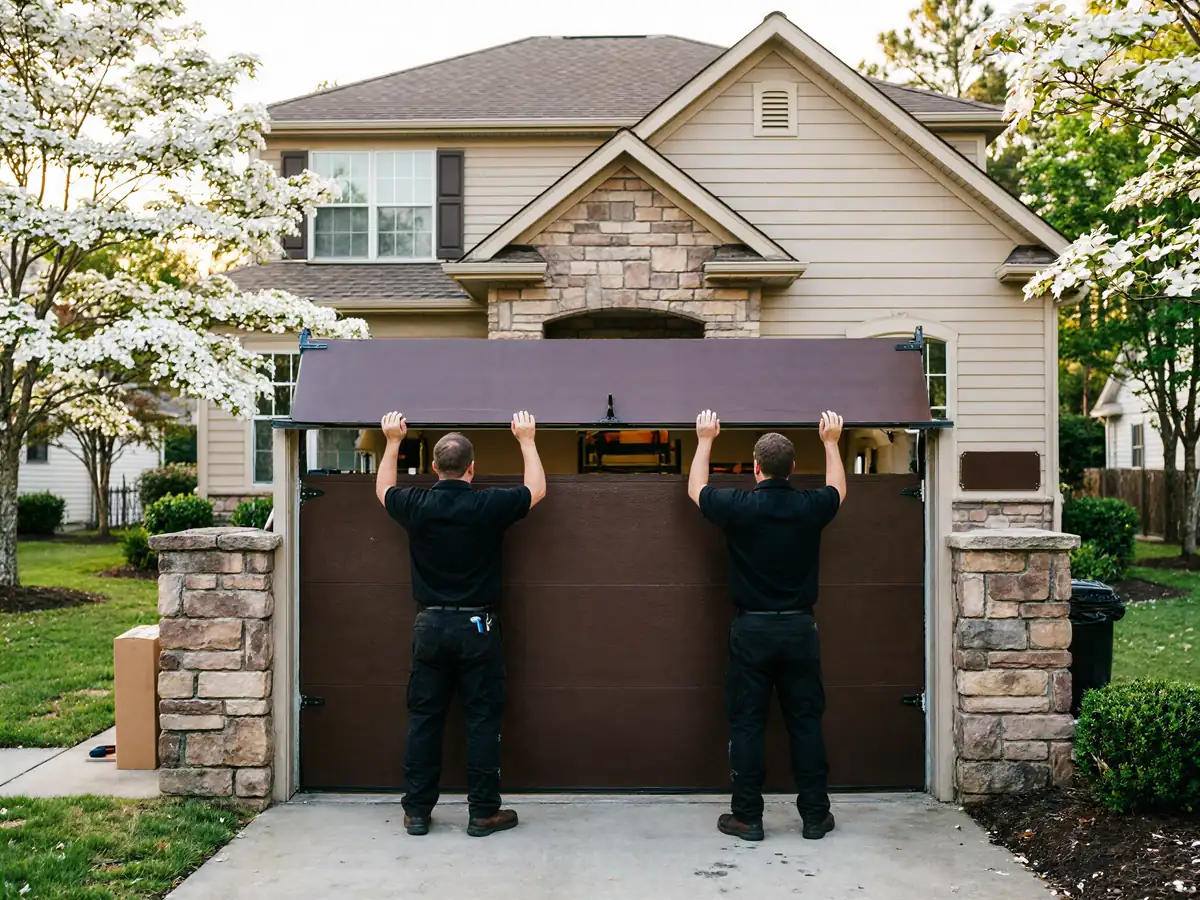
After the spring's on, we balance the door by hand with the opener disconnected
Lift it halfway and it should stay put on its own. If it drifts up or drops down, the spring tension isn't right yet. That balance check is the difference between a repair that holds and one that's back on our schedule in six months.