The DIY Question
Buies Creek sits 13 miles from our shop in Fuquay-Varina
Which changes how we think about a call here before we even load the truck. A 13-mile drive means we're not turning around twice in an afternoon to grab a part we guessed wrong about, so we ask more questions on the phone up front - what the door sounds like, whether it's one spring or two, whether the opener light blinks a code. That extra five minutes on the phone saves you from us showing up with the wrong torsion spring size and having to make the trip again.
- 13 miles
If you're the kind of homeowner who wants to try the fix yourself first, here's the honest line
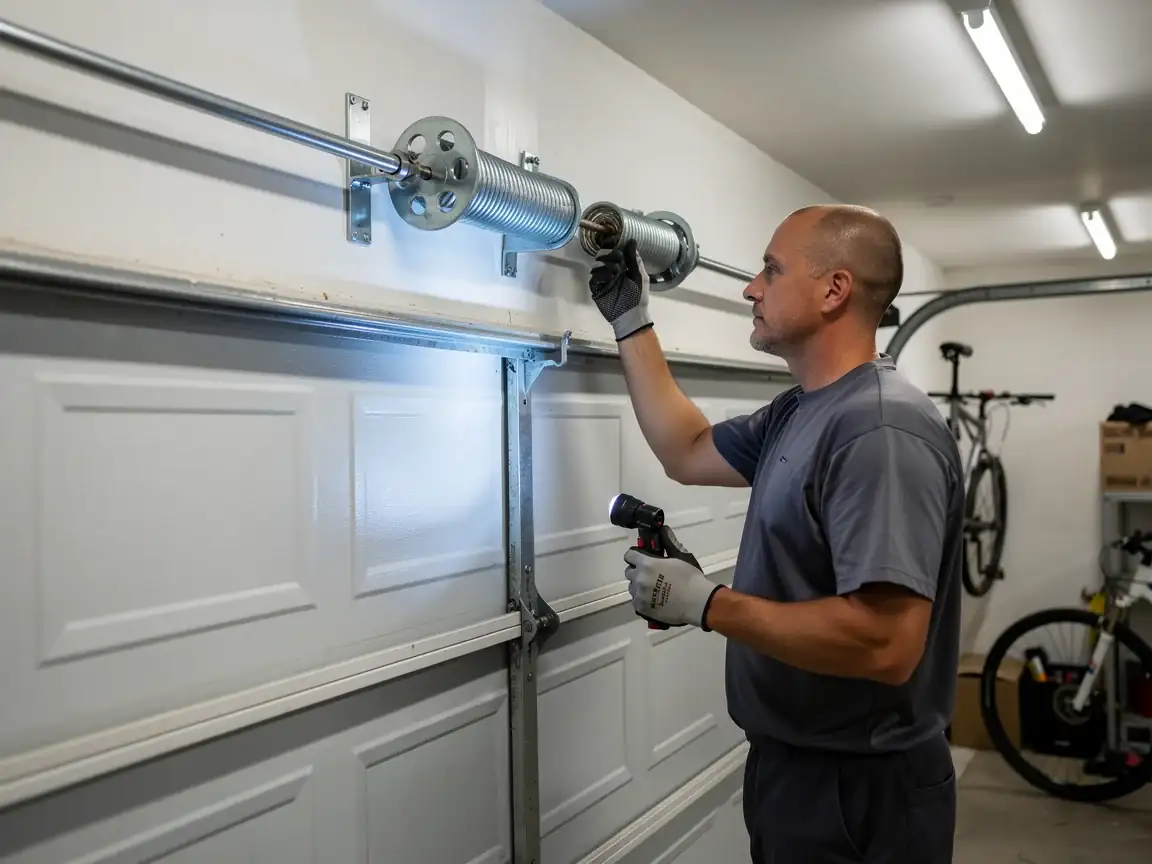
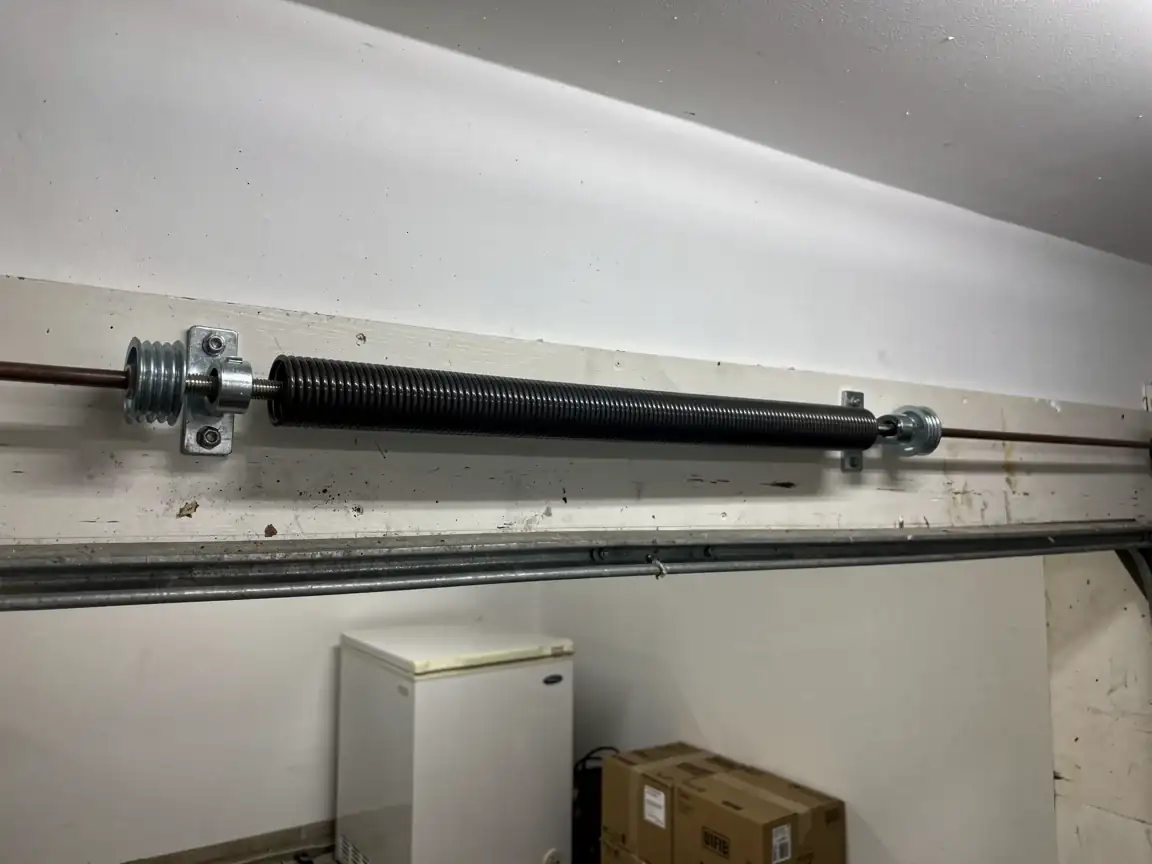
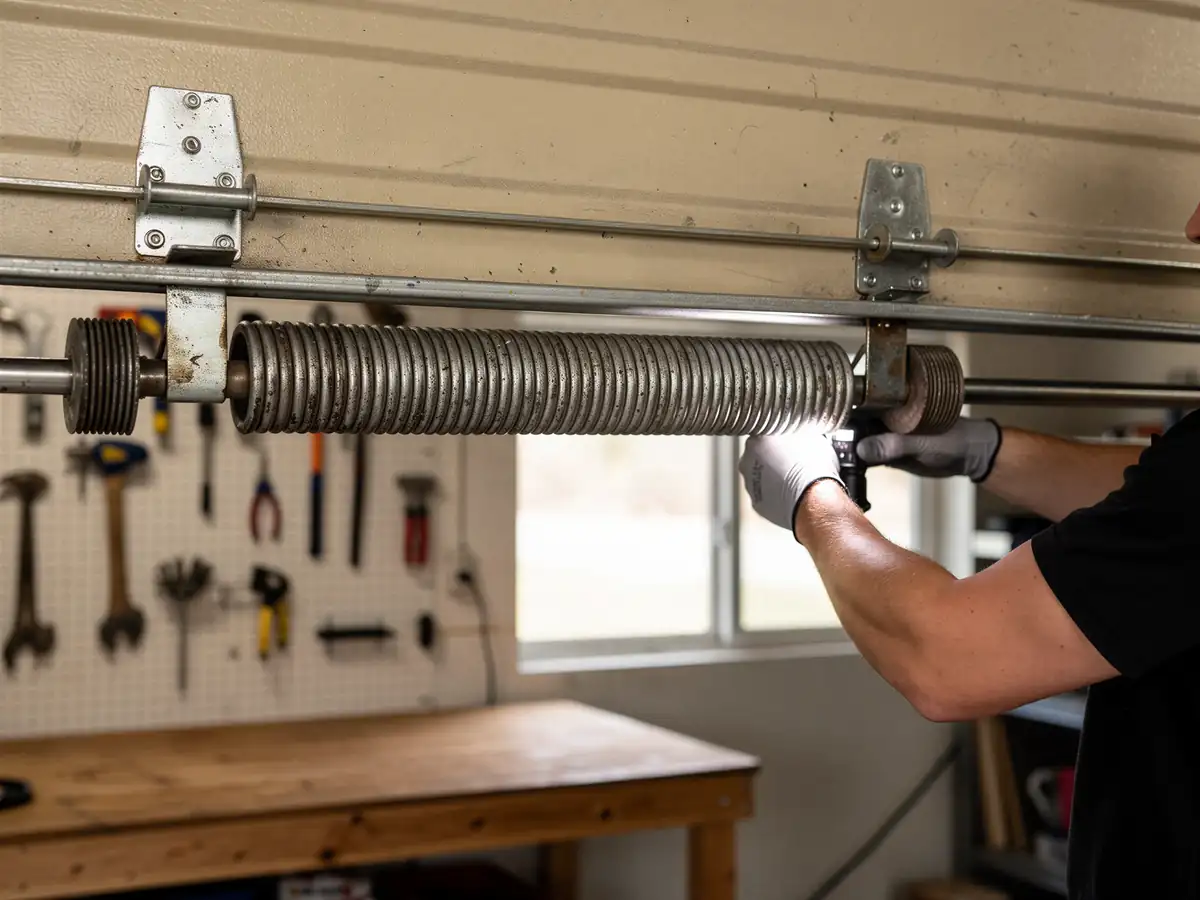
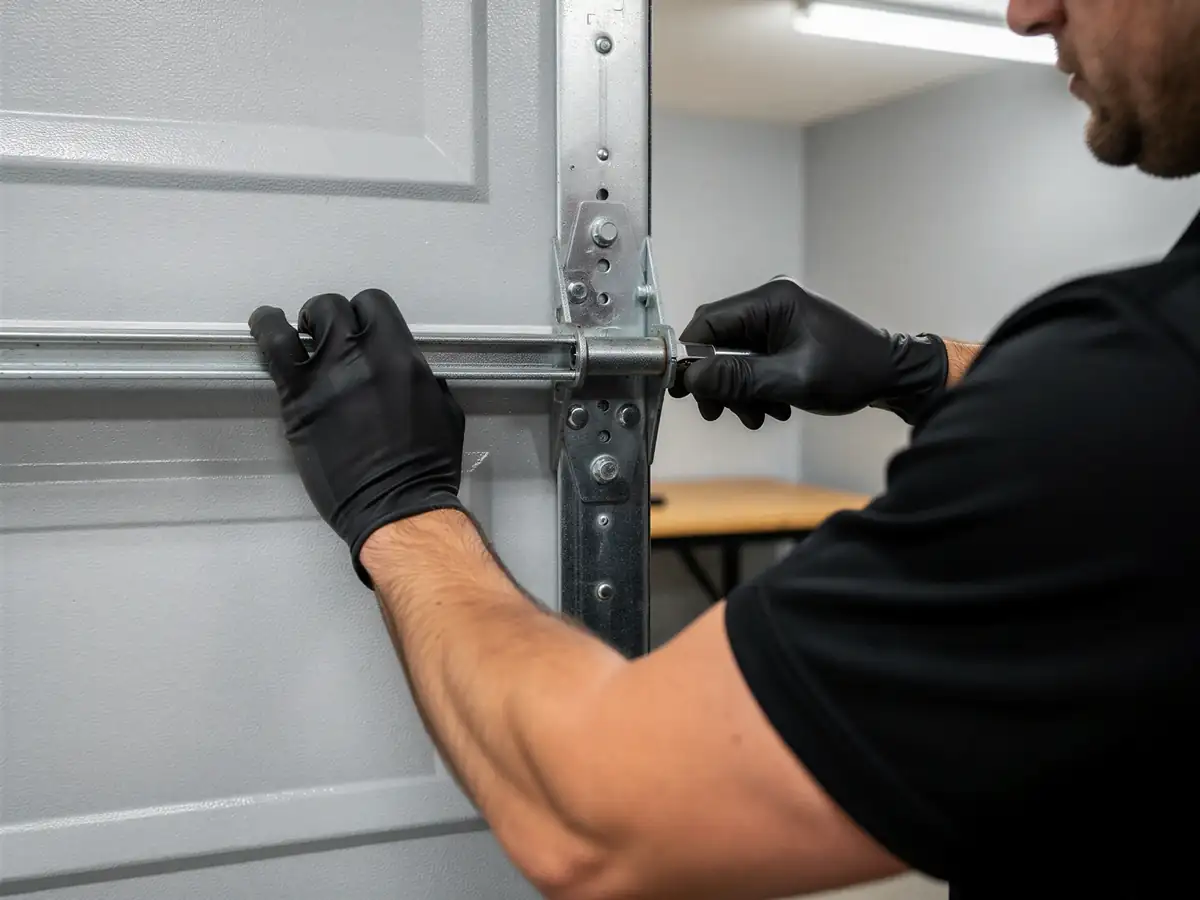
Tightening a loose opener bracket or lubricating hinges is fine. Touching a wound torsion spring is not. A spring under tension can put you in the hospital, and it's the single most common DIY-gone-wrong call we get anywhere in the area, Buies Creek included. If the door won't move and you hear a bang, stop and call - don't start unscrewing anything near the spring bar.
What You Are Seeing
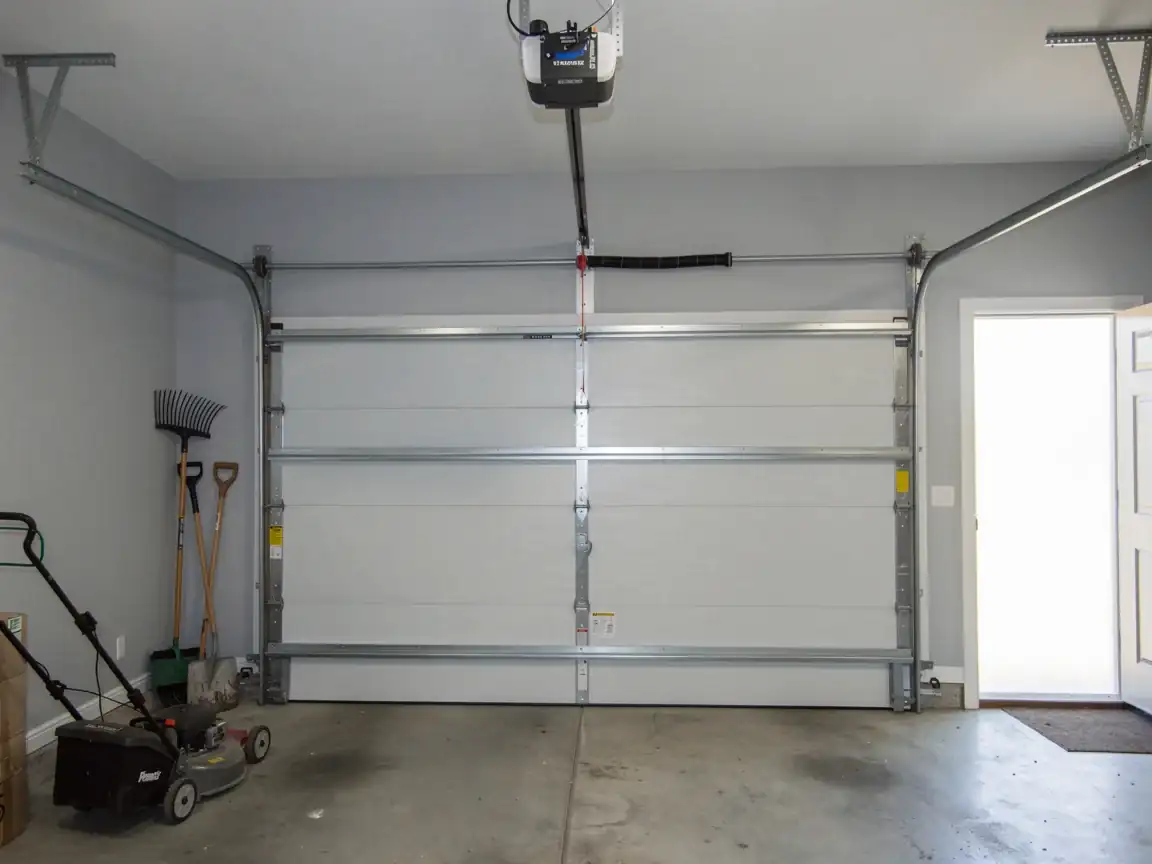
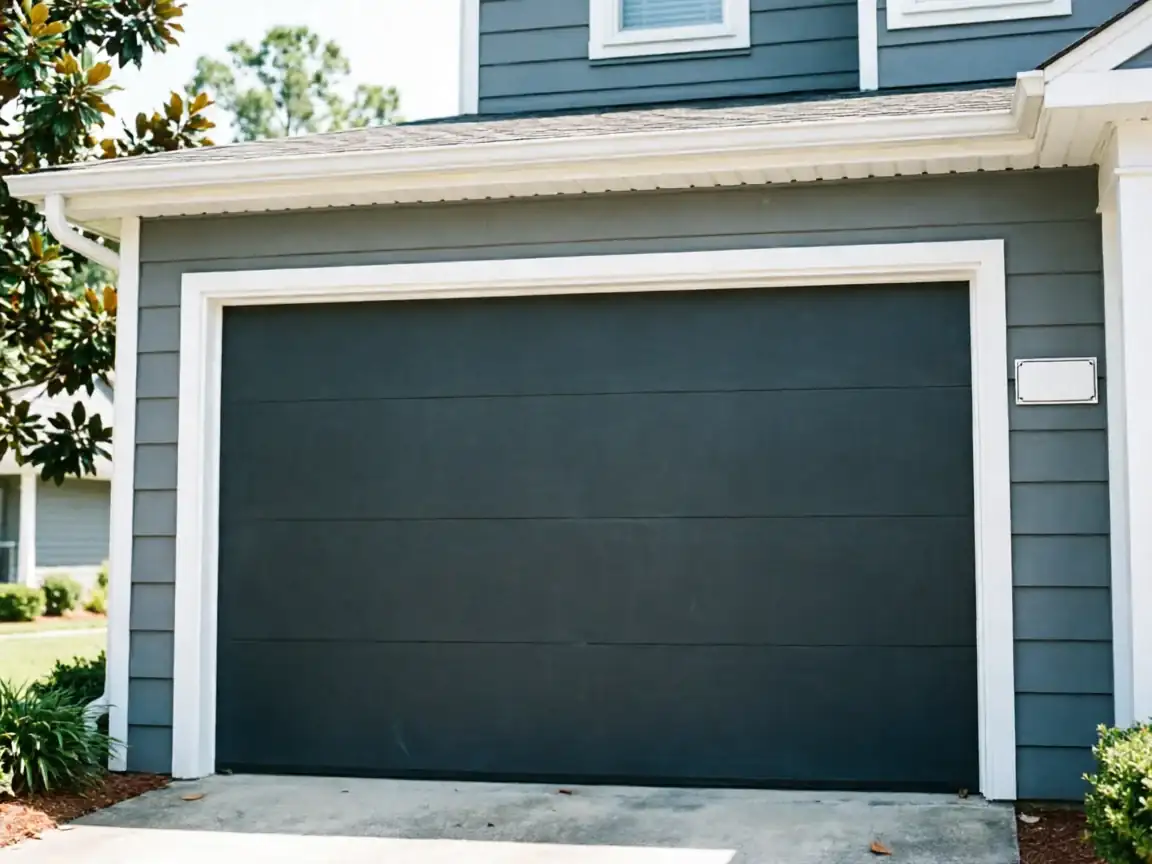
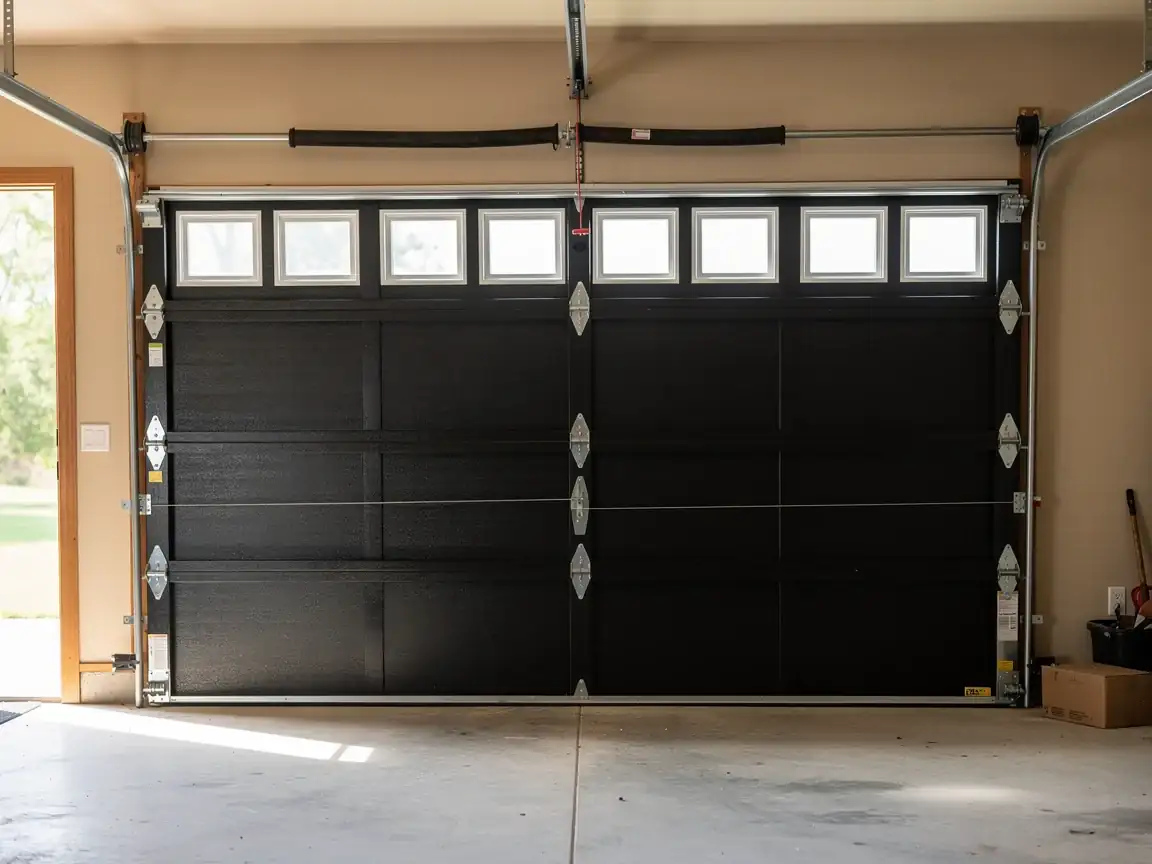
Most of the homes we've worked in around Buies Creek are newer than what you'll find closer to Fuquay-Varina itself - the housing stock across this service area runs from 1959 up to 2002, and Buies Creek sits toward the newer end of that range. That matters for the kind of failure you're likely dealing with. Newer builds generally came with factory-installed torsion springs and steel sectional doors rather than the older single-piece wood doors you see on 1960s and '70s houses elsewhere in the territory.
What that means in practice: a door from this era rarely has the rotted bottom panel or warped wood jamb we find on an older house. Instead, what fails first is usually the spring itself - a torsion spring is rated for a set number of cycles, and a door opening twice a day for two decades burns through that rating. We also see worn nylon rollers and opener gear-sets starting to go on houses built in the late 1990s and early 2000s, since factory-grade rollers and openers from that era are reaching the end of their service life right about now.
What Is on the Truck
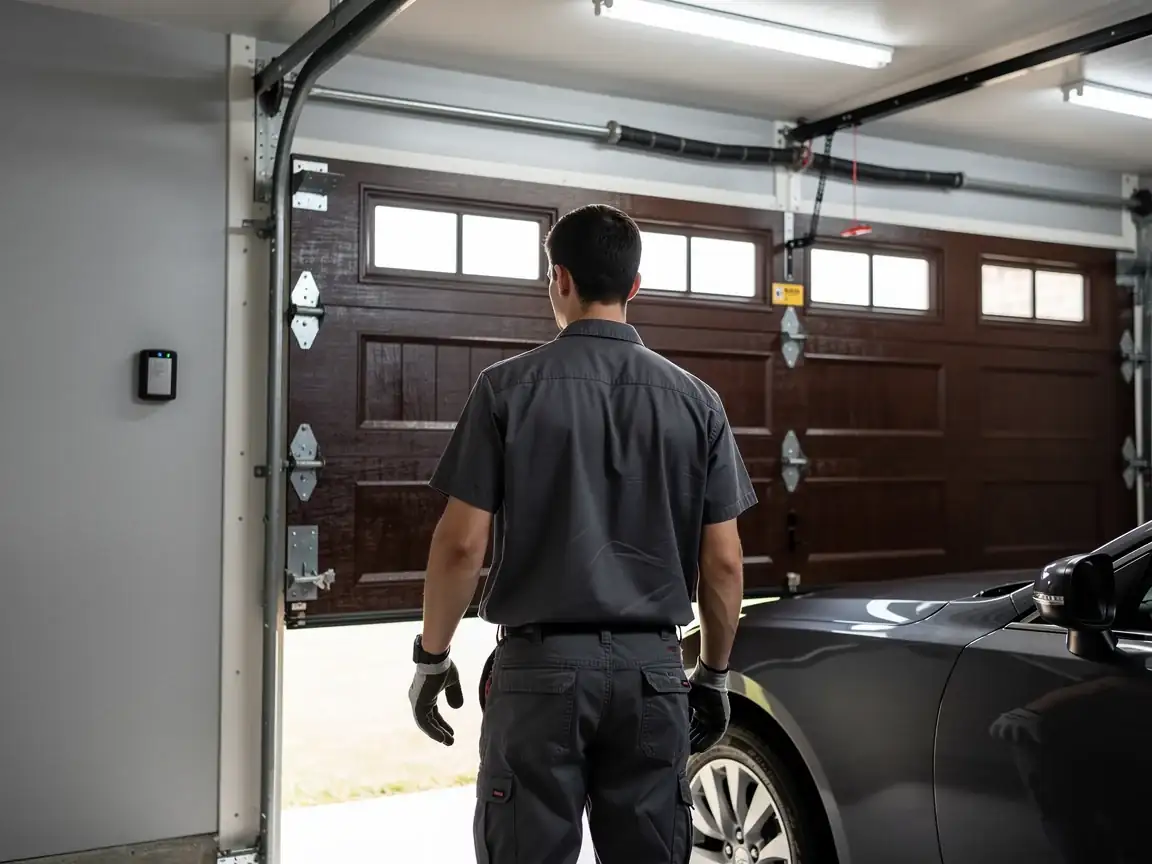
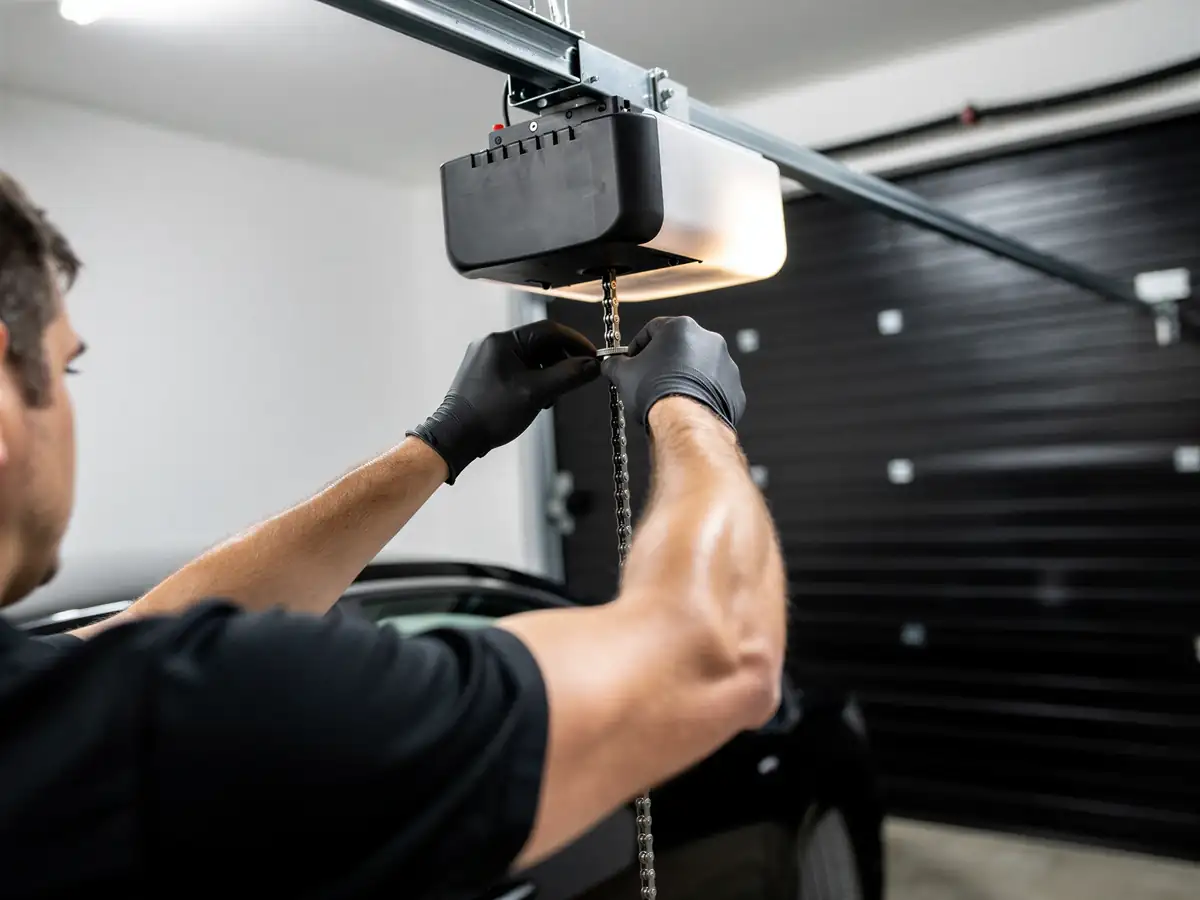
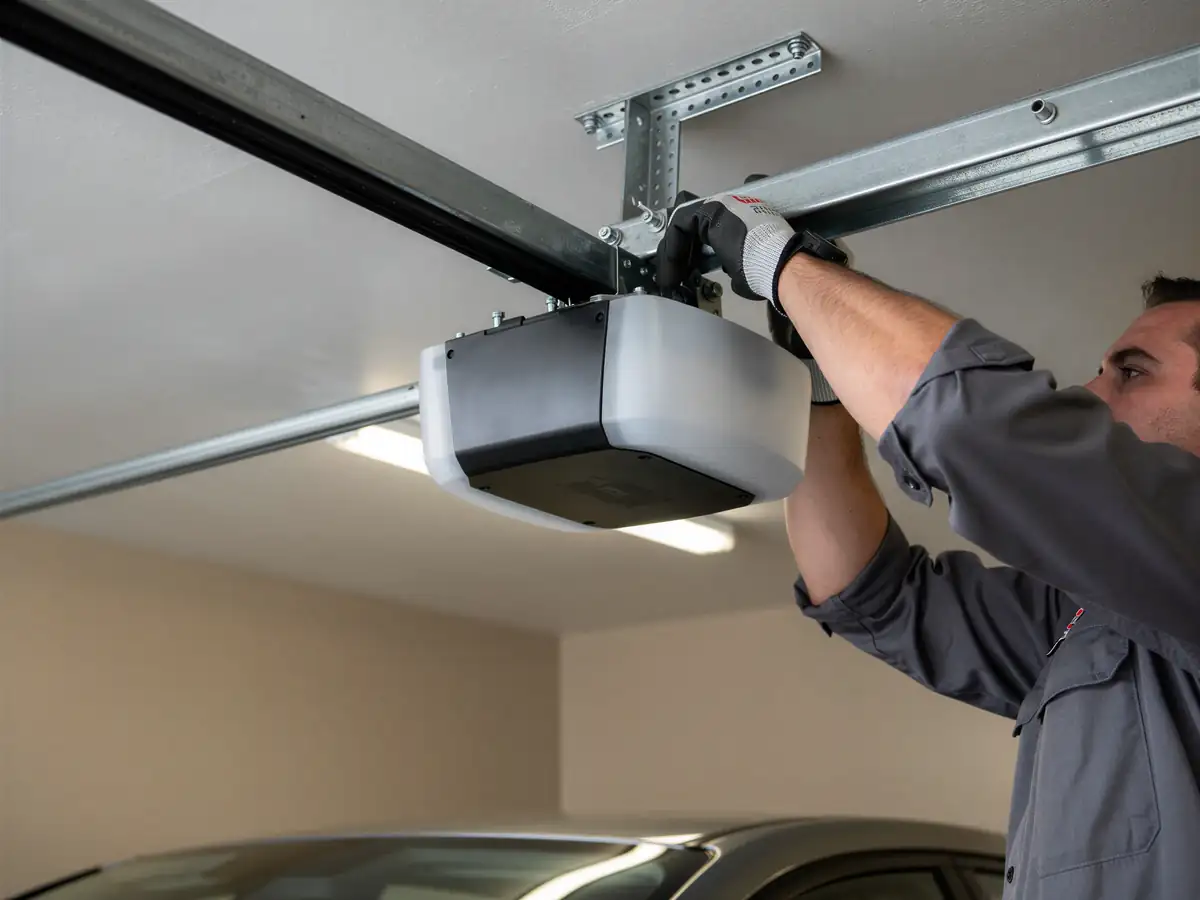
Because the drive out to Buies Creek is 13 miles each way, we load for torsion spring work before we leave - the most common call from newer-stock neighborhoods is a broken torsion spring, not a cable or a panel. We carry a range of spring sizes to match the taller, heavier steel doors common in homes built since the late '90s, along with standard nylon and steel rollers and the opener parts that fail most often: logic boards, drive gears, and safety sensor eyes.
We stock common replacement parts, but we don't carry every opener model on every truck - garage door openers interchange, but belt-drive units from certain manufacturers use logic boards we may need to order. If that's your situation, we'll tell you on-site rather than quote a same-visit fix we can't deliver. In a climate that swings cold enough to stiffen grease and tighten metal tolerances in winter, we also carry cold-weather lubricant rather than the standard stuff, since standard grease can gum up in the colder months and make a door feel like it's fighting you.
What It Costs
We don't have a published price list specific to Buies Creek
And we're not going to invent one here - what a job costs depends on the door size, spring weight, and whether the opener needs a part or a full swap. What we can tell you is what drives the number: double doors need two springs rated higher than a single door's one spring, and a full opener replacement costs more than swapping a gear kit inside an opener that's otherwise sound.
The area's median household income sits at $52,458
And most of the jobs we price out here reflect that - homeowners want the repair, not an upsell to a full system replacement, when the door and opener are otherwise in decent shape. We'll tell you straight if your opener is old enough that replacement parts cost nearly as much as a new unit; that's not a sales pitch, it's just the math on certain older gear-drive models.
- $52,458 median household income
How to Book
Call or use the booking link below and tell us what you're seeing - a door that won't budge, an opener that runs but the door doesn't move, a spring that's visibly separated. Because we're traveling in from Fuquay-Varina, giving us the detail up front (what the door sounds like, how old the house is if you know it, whether the opener light blinks) lets us bring the right spring size and parts on the first trip instead of a second one.
We book repair jobs here the same way we book them closer to the shop - we don't run a separate schedule or a faster slot for any one town in the service area, so what you get is based on when the next opening is, not on distance.
Where This Job Goes Sideways
The call that goes wrong most often in a newer-built neighborhood like this one is the door that's been fighting a failing opener for months before anyone calls. The owner assumes the door is fine because it still opens, just slower, or needs a second press of the remote. By the time we get there, the opener gear is stripped and the door has been riding on a spring that's lost more tension than it should have, because the opener was masking how hard the door was actually working.
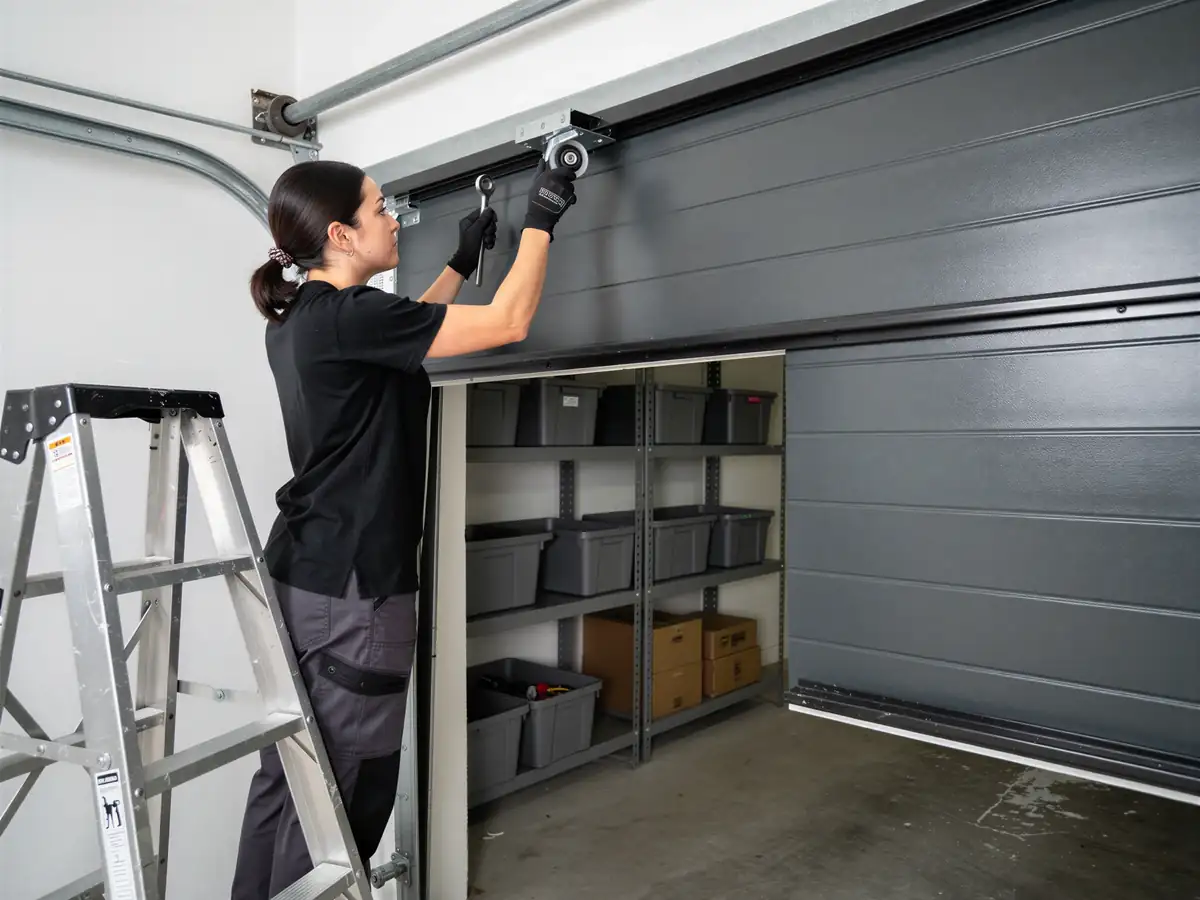
The other place it goes sideways: a steel door on a newer house looks fine from the driveway but has a bent track from a car bumping it years back. Straightening a track sounds simple and sometimes is, but if the bend is sharp enough, the track needs replacing, not straightening - and that's a different job than the spring swap you called about. We'll tell you which one you've actually got before we start, not after.